
HP Blue 4463 — Pigment Blue 1 for Specialty Inks & Decorative Coatings | Honor Pigments

Technical Information What Is PB1 Pigment Blue 1 (CAS 1325-87-7, CI 42595:2) is a triarylmethane PTMA lake pigment, molecular formula C₃₇H₂₈N₂Na₂O₈S₂W, occupying the brightest red-shade blue in the organic pigment spectrum—a position phthalocyanine blues cannot reach. Its triarylmethane carbocation chromophore is precipitated with phosphotungstomolybdic acid, converting the water-soluble cationic dye into an insoluble pigmentary form. … Read more
HP Orange 3357 — Plastics-Grade Pigment Orange 13 (PO13) for Low-Warpage PP & PVC | Honor Pigments

HP 3357 — Plastics-Grade Pigment Orange 13 (PO13) Low-Warpage PP/PVC | Honor Pigments Technical Information What Is PO13 A plastic part coming out of the mold warped is not a pigment problem — until the pigment is what’s causing the warpage. In semi-crystalline polymers like polypropylene, organic pigment particles act as heterogeneous nucleation sites during … Read more

HP Orange 3434 — High-Strength Pigment Orange 13 (PO13) for Solvent Inks & Textile Printing | Honor Pigments

HP 3434 — High-Strength Ink & Textile Pigment Orange 13 (PO13) | Honor Pigments Technical Information What Is PO13 In solvent-based gravure printing, the orange ink film on the substrate is typically 1 to 3 microns thick — thinner than a human hair. At that film weight, every gram of pigment in the formulation must … Read more

DPP vs Quinacridone Pigments: Performance, Cost, and Application Guide

DPP vs Quinacridone Pigments: Performance, Cost, and Application Guide Engineer-grade comparison for high-performance organic pigments: chemical stability, color strength, and total cost of ownership. Contents 1. Chemistry & Molecular Structure 2. Performance Comparison Table 3. Application Matrix by Industry 4. Total Cost Analysis 5. FAQ (3 Questions) Request Free Trial Pack 1. Chemistry & Molecular … Read more

DPP vs Quinacridone Pigments: Performance, Cost, and Application Guide

DPP vs Quinacridone Pigments: Performance, Cost, and Application Guide Engineer-grade comparison for high-performance organic pigments: chemical stability, color strength, and total cost of ownership. Contents 1. Chemistry & Molecular Structure 2. Performance Comparison Table 3. Application Matrix by Industry 4. Total Cost Analysis 5. FAQ (3 Questions) Request Free Trial Pack 1. Chemistry & Molecular … Read more

PR122 vs PR254: Your Red Pigment Costs 30% More Than It Should — Here’s Why

Delta E 0.8 vs Delta E 2.3. That is the difference between a batch your customer accepts and one they reject. PR122 and PR254 are both high-performance reds. But choosing the wrong one costs you lightfastness, dispersibility, or 30% on your pigment bill — before you even open the drum. Chemistry: Quinacridone vs DPP Property … Read more

Pigment Red 53:1 — Lake Red C (Lake Red C) Barium Salt for Printing Inks

Pigment Red 53:1 (Lake Red C) Barium Salt – for Printing InksLake Red CComplete Technical Dossier H1: Pigment Red 53:1 (CI 15585:1) – Barium Salt Lake Red C for Printing Inks Lake Red CLake Red CBarium Salt FormC.I. Number: CI 15585:1is one of the most widely used red organic pigments in the printing ink industryHONOR … Read more

HONOR Pigment Red 177 & Yellow 151 — Non-Halogenated DPP Red + Chromate-Free Isoindoline Yellow for High-Performance Industrial Coatings, Plastics & Powder Coatings

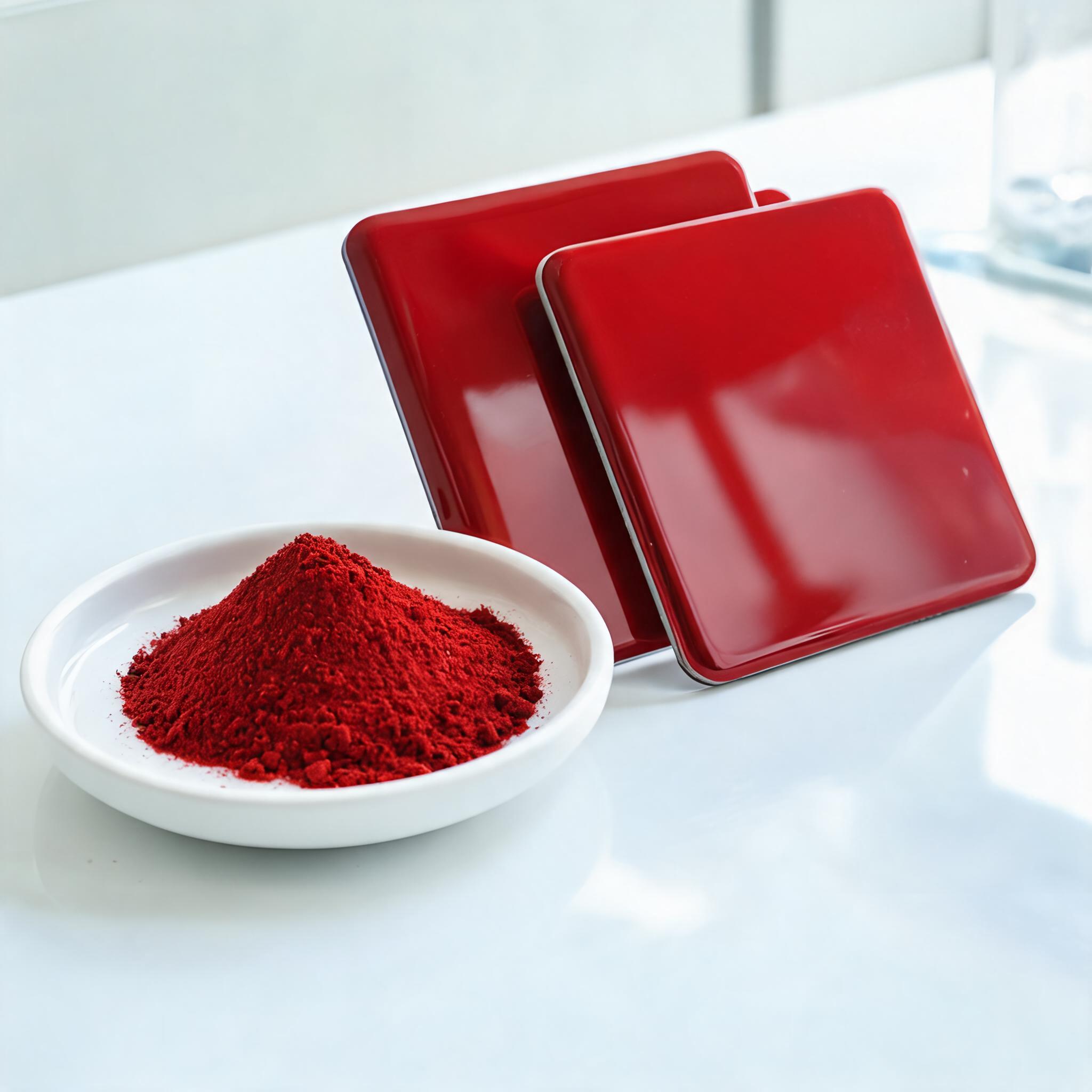
PR177 DPP Red pigment laboratory photograph

Technical deep dive: HONOR Red 177-SP (non-halogenated DPP, C.I. 65300) delivers weatherfastness grade 7.5 and sub-50 ppm VOC residuals for automotive refinish and coil coatings. HONOR Yellow 151-HP (isoindoline, C.I. 13980) offers 142% tinting strength, 300°C heat stability, and zero heavy metals as a lead chromate replacement. Complete technical data, comparison tables, and formulation guidance.

Heat Stable Organic Pigments for 300°C Plastics: Expert Guide

Heat Stable Organic Pigments for 300°C Plastics: Expert Guide

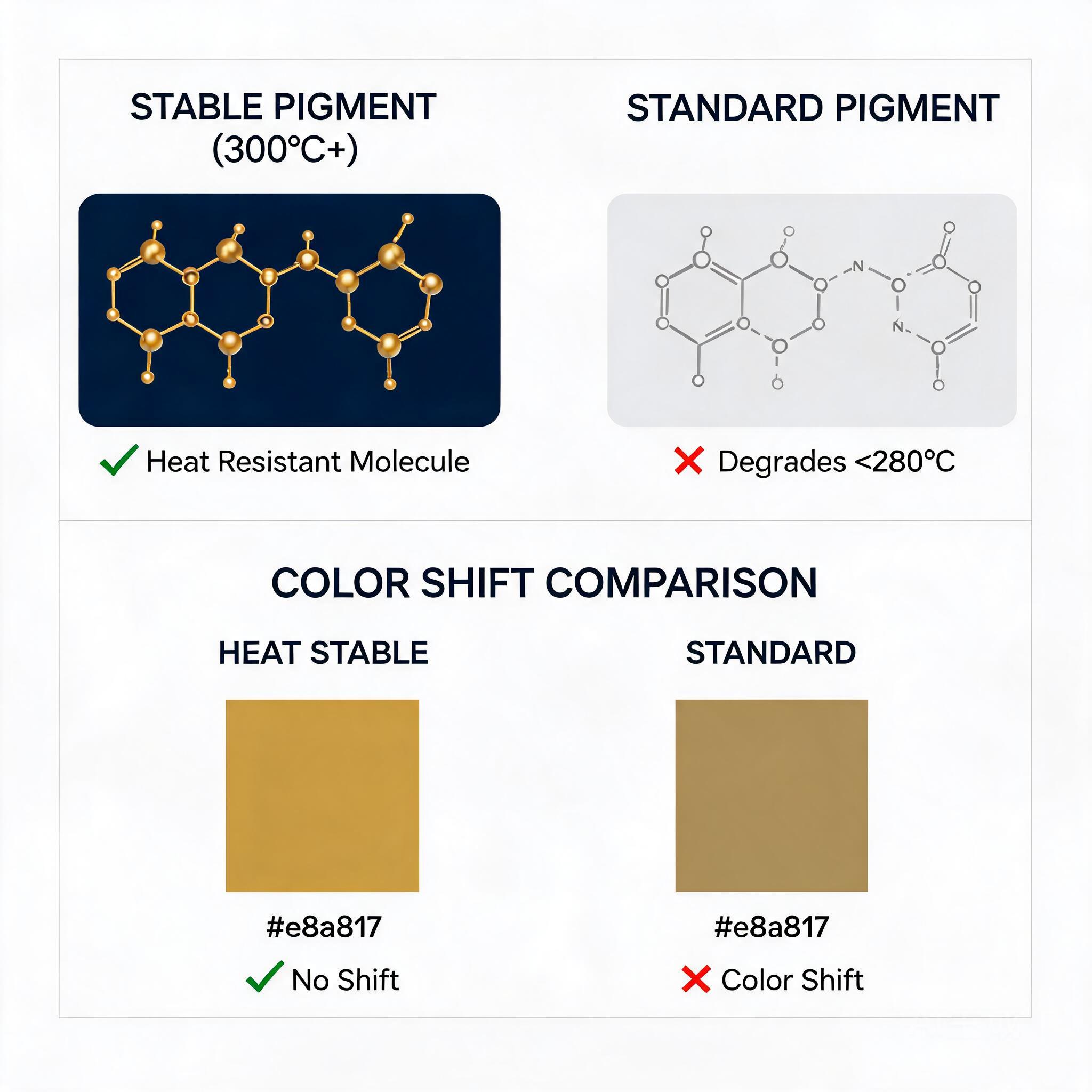
Heat Stable Organic Pigments for High-Temperature Plastics: 300°C+ Processing Guide When processing engineering plastics at temperatures above 280°C, standard organic pigments often undergo thermal degradation—causing color shift, browning, or complete loss of chroma. To avoid scrap and ensure consistent color, you need heat stable organic pigments designed for high-temperature masterbatch and direct molding. This guide … Read more