
Pigment Yellow 14 for Solvent-Based Gravure and Flexo Inks: High Flow and High Gloss on Films and Paper
Comprehensive guide to Pigment Yellow 14 for solvent gravure & flexo inks—formulation tips to achieve high flow and high gloss with NC/PU and ethanol/ethyl acetate. Learn more.
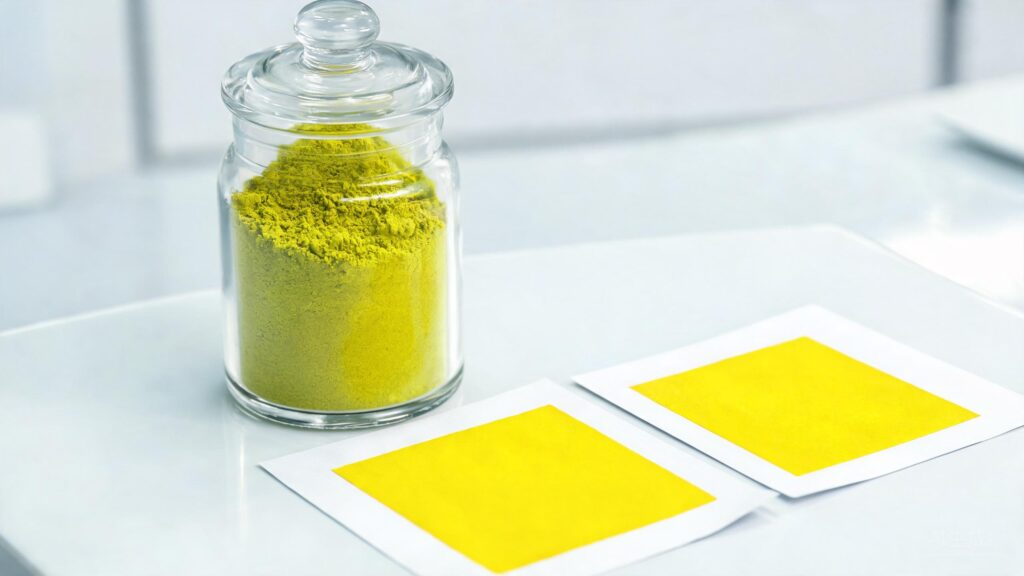
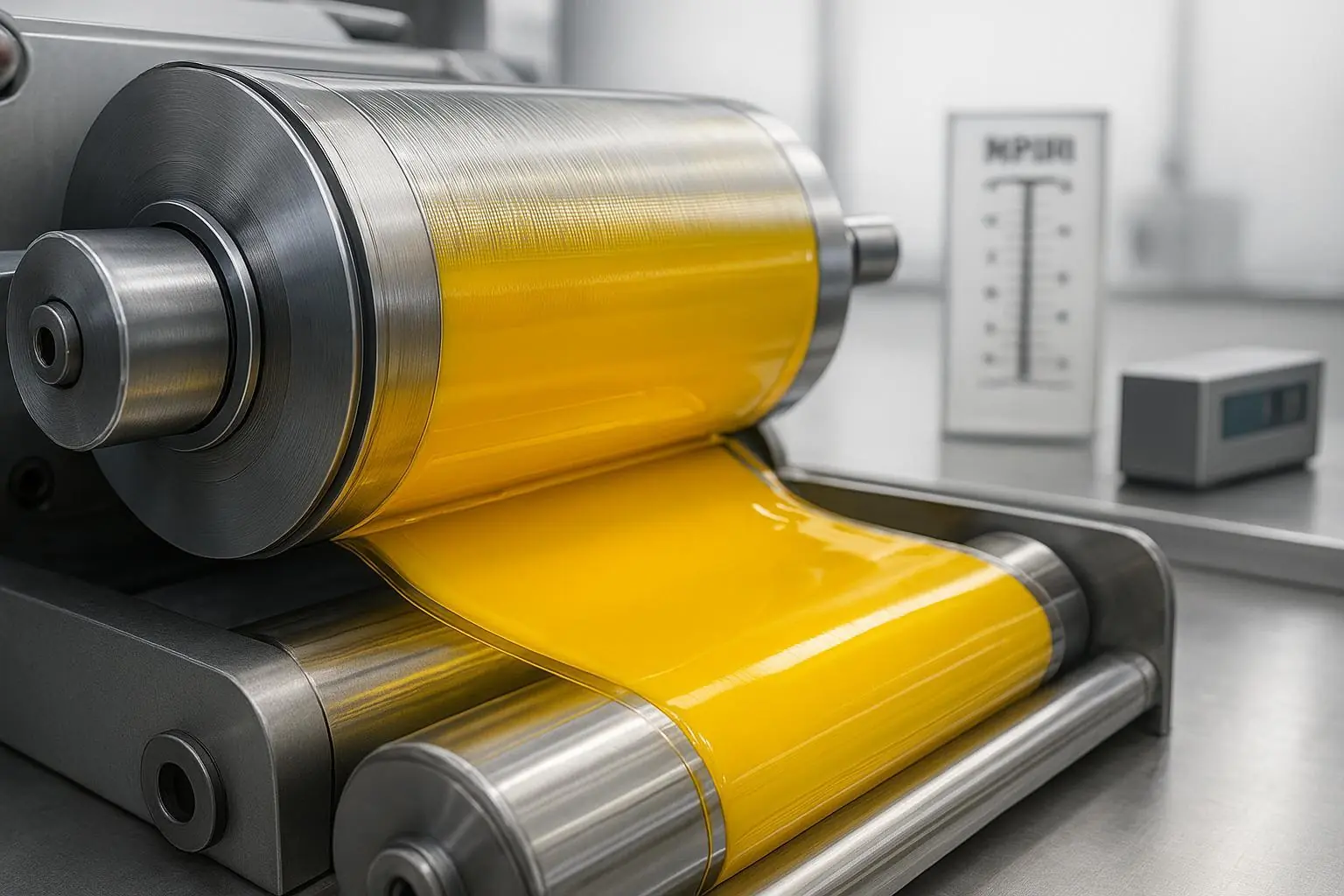
Pigment Yellow 14 for Solvent-Based Gravure and Flexo Inks: High Flow and High Gloss Formulation Guide
If you formulate or run solvent-based gravure and flexographic inks, you know the daily trade-offs: keep solids high for strength, keep viscosity low for transfer, and still lay down a level, mirror-like film. This guide shows how to make that balance work with Pigment Yellow 14 (PY14) in toluene-free ethanol/ethyl acetate systems using nitrocellulose (NC) and polyurethane (PU) binders—on OPP/PET/PA films and on paper. The formulation principles are universal whether you’re running a Japanese gravure line on OPP film, a German flexo operation serving brand-owner packaging specifications, a Korean solvent-ink compounder, or a Southeast Asian converter transitioning to toluene-free systems.
Related guides: Pigment Yellow 14 for plastics · Pigment Yellow 12 for water-based inks · Pigment Yellow 139 for inks · HP Yellow 1543 (PY14) product page
PY14 Fundamentals for Solvent Inks
Pigment Yellow 14 is a diarylide yellow pigment widely used in packaging inks for mid-shade, bright yellow tones. In solvent-borne gravure and flexo systems, PY14 is valued for color strength, transparency, and cost-effectiveness across surface-print films and paper. Diarylides form plate-like particles via coupling reactions; when well dispersed, these particles produce smooth, glossy films at practical coat weights and press speeds. For a complete overview of yellow pigments for printing, browse our printing ink pigments catalog.
PY14 Solvent Ink Formulation Targets Table
| Focus Area | Practical Target |
|---|---|
| Dispersion quality | Low NPIRI (minimal coarse residues); tight D90 (ASTM D1316) |
| Binder window (films) | NC:PU 60:40 to 80:20 |
| Binder window (paper) | NC:PU 80:20 to 90:10 |
| Solvent balance | 50–70% ethyl acetate, 30–50% ethanol; adjust ±5–10% |
| Substrate energy (OPP) | ≈38–42 dynes/cm |
| Substrate energy (PET) | ≈44+ dynes/cm |
| Flexo anilox | LPI ≈6× plate LPI (60° hex cells) |
| Gravure screen | 200–600 lines/cm, optimized depth |
| QC on ink | 60° gloss (disclosed method); rheology at 25°C; PSD/NPIRI logs |
Particle Size and Dispersion: The Flow/Gloss Equation
Finer, controlled PSD and low NPIRI grind values increase color strength and enable smoother films with fewer micro-roughness peaks—conditions that drive high gloss. Oversized tails and agglomerates raise viscosity, trigger hickeys, and disrupt leveling. The mechanism: as average particle size decreases and the coarse tail is reduced, surface area and optical uniformity increase, yielding stronger tone and higher DOI-like gloss. See HORIBA’s pigment and ink particle size guide for PSD-to-gloss context.
NC and PU Binder Strategy
-
NC (nitrocellulose): Fast drying, crisp laydown, naturally high gloss in surface-print inks. Brittleness and limited adhesion to low-energy films are moderated by co-binders.
-
PU (polyurethane): Improves adhesion to OPP/PET and adds flexibility/toughness, preserving gloss under mechanical stress. See Ink World Magazine’s resin overview.
Work within a blend window: NC-rich for paper and quick gloss; PU-rich for demanding films and high-speed reverse/lamination contexts.
Formulation Playbook: Millbase to Press-Ready
-
Millbase: PY14 25–40% of millbase; dispersant 1.0–3.0% on pigment; NC or PU pre-solution 10–25% (as solids); ethyl acetate/ethanol balance. Grind to low NPIRI/μm with narrow coarse tail.
-
Letdown to press-ready ink: NC:PU solids ratio 70:30 for films (80:20 for coated paper); solvent starting point: ethyl acetate 65%, ethanol 35%; fine-tune for cell release vs set/dry (toluene-free).
Toluene-Free Solvent Systems: Ethanol + Ethyl Acetate
Ethyl acetate flashes faster; ethanol moderates evaporation to keep ink open in cells/anilox. Start with 65:35 ethyl acetate:ethanol for films; adjust ±5–10% based on press temperature, speed, and ink coverage. Monitor moisture—excess water compromises NC solubility and clouds appearance. See Covestro’s ink resins brochure.
On-Press Realities: Gravure vs Flexo on Films and Paper
Film Wetting and Transfer
-
OPP/PET/PA demand surface treatment: target ≈38–42 dynes/cm for OPP, ≈44+ dynes/cm for PET. See Enercon’s dyne-level guidance.
-
PU content supports adhesion on non-polar films; adjust PU share if bond is weak.
Cell Geometry
-
Flexo: Align anilox LPI/volume to plate and density needs. Anilox 101 (Apex International).
-
Gravure: Screens ~200–600 lines/cm with depth/opening matched to coverage and solvent set.
QC Metrics That Predict Success
-
60° gloss: Use recognized geometries (Rhopoint IQ). Rhopoint 60° gloss overview
-
NPIRI fineness: ASTM D1316 gauges. Elcometer NPIRI guide
-
PSD reporting: D10/D50/D90 trends; rotational viscosity vs shear rate at 25°C
Practical PY14 Workflow Template
-
Select a mid-shade PY14 grade suited to NC/PU vehicles. HP Yellow 1543 (PY14) is appropriate for ethanol/ethyl acetate systems. See Pigment Yellow 139 for inks for high-performance diarylide alternatives.
-
Build millbase at 30–35% pigment, dispersant 1.5–2.0% on pigment, ethyl acetate/ethanol primary solvent blend.
-
Disperse using bead mill (0.6–0.8 mm media), monitor temperature, target fine NPIRI grind with tight D90. Filter.
-
Let down: NC:PU 70:30 for films, 80:20 for coated paper. Tune solids for density without climbing viscosity.
-
Start with 65:35 ethyl acetate:ethanol; adjust per leveling vs set on press. Record viscosity vs shear and cup seconds.
-
Press checks: Confirm OPP/PET treatment levels; set gravure cylinder or flexo anilox; observe laydown and gloss; adjust solvent ratio or dryer temperature in small steps.
Pigment Yellow 14 Solvent Ink FAQ
What is Pigment Yellow 14 used for in printing inks?
Pigment Yellow 14 (PY14) is a diarylide yellow pigment primarily used in solvent-based gravure and flexographic packaging inks on OPP, PET, PA films, and paper. It provides bright mid-shade yellow with good color strength, transparency, and cost-effectiveness. PY14 is also used in offset inks, water-based inks, and plastics. See HP Yellow 1543 product page for grade-specific data.
What NC:PU ratio is best for PY14 solvent inks?
For films (OPP/PET), start with NC:PU solids ratio 70:30—NC provides fast drying and gloss, PU provides adhesion and flexibility. For coated paper, shift to 80:20 NC:PU. Adjust within windows of 60:40 to 80:20 (films) and 80:20 to 90:10 (paper) based on adhesion tests and press conditions.
What solvent ratio is recommended for toluene-free PY14 inks?
Start with 65:35 ethyl acetate:ethanol for flexible film printing. Adjust ±5–10%: increase ethyl acetate for faster drying on high-speed presses; increase ethanol for better leveling and reduced orange peel. For coated paper, lean toward 60:40 ethyl acetate:ethanol. Always monitor moisture content to prevent NC solubility issues.
How do I achieve high gloss with PY14 in solvent inks?
High gloss with PY14 starts with tight particle size distribution: aim for low NPIRI grind with minimal coarse tail (ASTM D1316). Use NC-rich binder systems (70:30 NC:PU for films) for naturally glossy surfaces. Control solvent balance to prevent orange peel—nudge ethanol slightly higher if drying is too fast. Measure 60° gloss with disclosed substrate, coat weight, and drying profile per Rhopoint or equivalent glossmeter methodology.
Is PY14 suitable for food packaging inks?
PY14 suitability for food packaging depends on pigment purity, the full ink/overprint/laminate build, and processing (including solvent removal). Follow EuPIA Good Manufacturing Practice (GMP) and EuPIA Guideline on Printing Inks for Food Contact Materials. Some supply chains reference the Swiss Ordinance positive lists for non-food-contact ink layers. Always validate with migration testing appropriate to your end use. Contact us for compliance documentation.
Packaging Compliance
According to EuPIA’s Guideline (2023) and EuPIA GMP 5th version (2025), responsibilities and documentation should be defined across the supply chain. Always validate with migration testing for your end use.
Need Pigment Yellow 14 for your ink formulations? Contact Honor Pigment for TDS/SDS, free evaluation samples of HP Yellow 1543, and solvent-system-specific dispersion guidance. We support gravure and flexo ink manufacturers across Germany, Japan, Korea, Brazil, and Southeast Asia. Request your PY14 technical package →
Disclaimer: This article is for general reference only. Always verify specifications with our team and review the current full legal disclaimer, TDS and SDS before product use.
📦 Explore Our Complete Pigment Catalog
Looking for high-performance organic pigments? Browse our full product catalog with 188+ pigments, dyes, and additives. Request free samples today.
Need Industrial-Grade Pigments?
Talk to our technical team. TDS, SDS, and batch COA provided with every inquiry.
Request Technical ConsultationReady to Source Industrial Pigments?
Get technical data sheets, samples, and pricing for your specific application.
Get Technical Quote Browse Products