Descripción
Productos
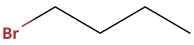
1-Bromobutane (also known as n-Butyl Bromide or Butyl Bromide) CAS No.: 109-65-9 , with the chemical formula C₄H₉Br and a molecular weight of 137.02 g/mol. It is a colorless to light yellow liquid with a characteristic or pleasant odor. This compound belongs to the class of alkyl halides and is primarily used in organic synthesis and as a solvent, though it is flammable and subject to safety regulations due to its irritant and environmental properties.
Propiedades
1-Bromobutane exhibits the following key physical and chemical properties:
- Estado físico: Líquido (a temperatura ambiente).
- Apariencia: Líquido transparente entre incoloro y amarillo claro.
- Olor: Characteristic or pleasant odor.
- Punto de fusión: -112 °C.
- Punto de ebullición: 101-102 °C.
- Densidad: 1.27 g/mL (at 25 °C).
- Solubilidad: Slightly soluble in water (0.6 g/L); miscible with organic solvents like ethanol, ether, and chloroform.
- Estabilidad: Stable under normal conditions; flammable with a flash point of 10-23 °C; incompatible with strong oxidants and strong bases.
- Toxicidad: Moderately toxic; LD50 oral in rat: 2761 mg/kg; causes irritation to skin, eyes, and respiratory tract; may cause respiratory irritation, headache, nausea; toxic to aquatic life with long-lasting effects.
Aplicaciones
The primary applications of 1-bromobutane include:
- Intermedio de síntesis orgánica: Used as an alkylating agent in the production of pharmaceuticals (e.g., procaine and tetracaine), agrochemicals, and other organic compounds; precursor for Grignard reagents and organometallics like n-butyllithium.
- Disolvente: Employed for cleaning, degreasing, and extraction in industrial and laboratory processes.
- Otros: Acts as a derivatization reagent for functional groups (e.g., amino acids to improve hydrophobicity); used as an internal standard in analytical techniques like gas chromatography for quantifying compounds in samples such as human urine.
Clasificación
The following table outlines the classification of 1-bromobutane based on chemical properties, uses, and regulations:
| Tipo de clasificación |
Categoría específica |
Descripción |
| Clase química |
Haluro de alquilo (bromoalcano) |
Un alcano primario bromado, reactivo en reacciones de sustitución nucleofílica (por ejemplo, SN2). |
| Clase de uso |
Reactivo/solvente de síntesis orgánica |
Primarily an intermediate for chemical synthesis and cleaning/degreasing applications. |
| Clase de peligro |
Flammable Liquid (UN 1126); Irritant |
Flammable (flash point 10-23 °C); irritating to skin, eyes, and respiratory system (GHS: H225, H315, H319, H335, H411); toxic to aquatic life; packing group II. |
| Clase reglamentaria |
Sustancia química controlada (REACH, TSCA) |
Registered under EU REACH (EC 203-691-9) and US TSCA; subject to environmental release controls and hazardous substance regulations (WGK 2 in Germany). |








 English (UK)
  Español
  Português
  Français
  Русский
  Türkçe
  العربية
  Bahasa Indonesia
  한국어
한국어  Čeština
  Nederlands
  עִבְרִית
  Ελληνικά
  日本語
日本語  Italiano
  Português do Brasil
  Deutsch
  Română
  Español de Argentina