
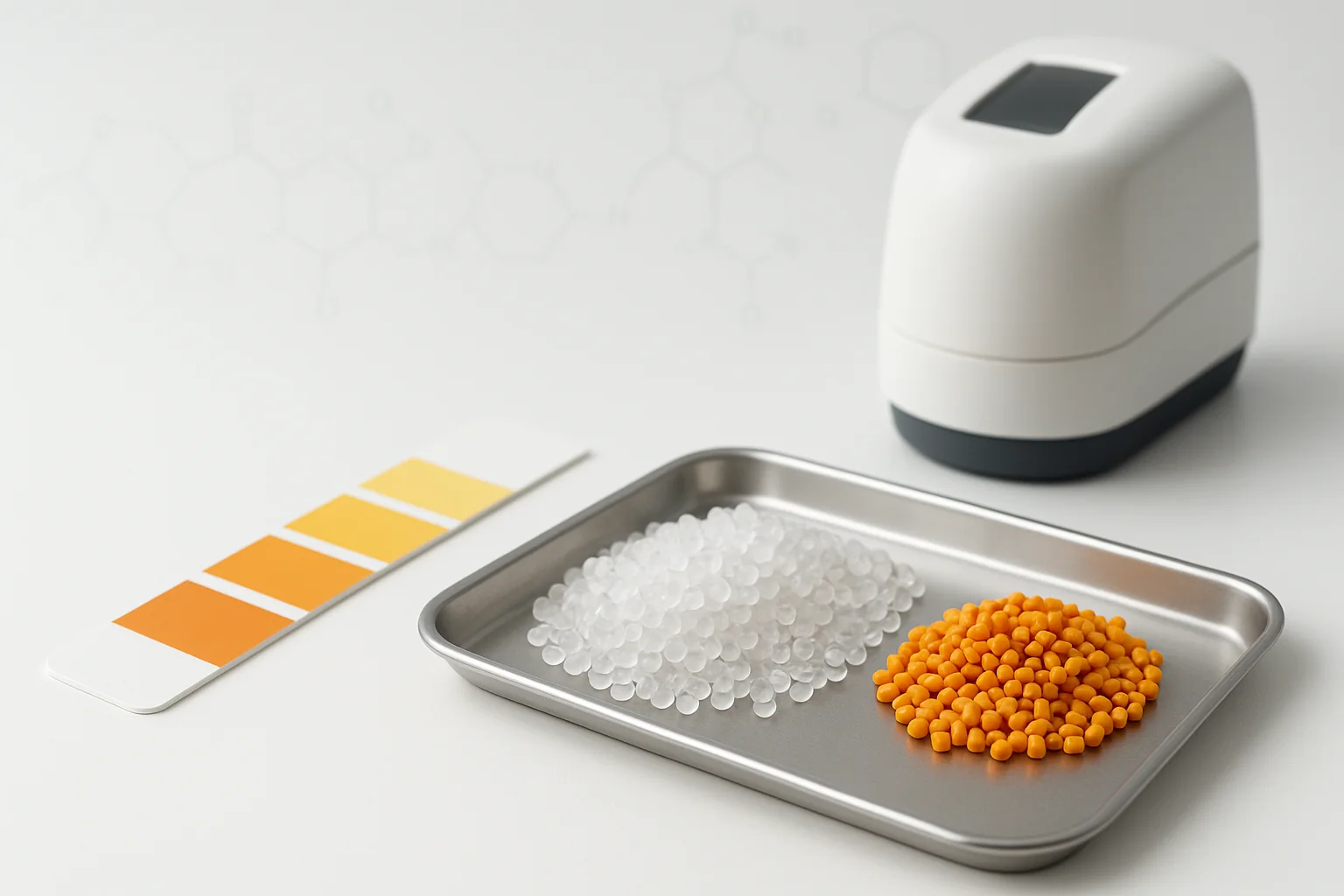
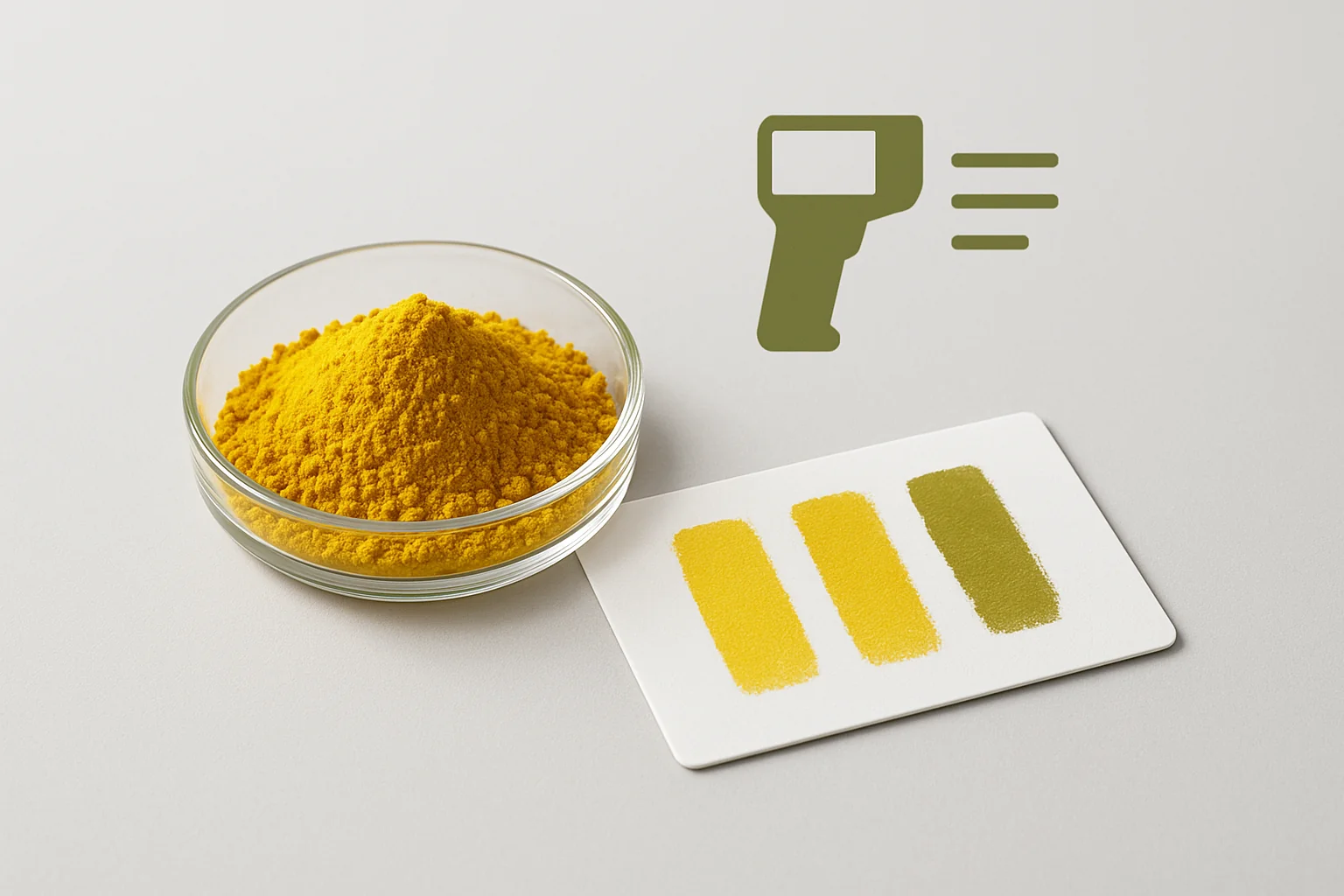
Pigment Yellow 151 (PY151) Buyer Checklist: Specs, Fastness, and Qualification
Pigment Yellow 139 (PY139): Elevate Your Ink Game with Confidence

Pigment Yellow 110 (HP Yellow 1315): Applications, Qualification, and Buyer Checklist

Pigment Yellow 138 Buyer Guide: How to Qualify a Supplier (TDS, SDS, COA)
Pigment Orange 34 (HP Orange 3646) — Opaque Type: A Best‑Practice Guide
P.Y.191 (Pigment Yellow 191, Pigment Yellow 191) is a monoazo calcium pigment lake with a typical shade of reddish yellow. In plastics coloration, it’s commonly positioned as an industrial yellow pigment that prioritizes processing stability and balanced fastness. Typical uses include masterbatch, modified plastics, and injection/extrusion applications.
For applications that must maintain shade stability at higher processing temperatures while controlling migration/bleeding risks across different polymer systems, P.Y.191 is usually evaluated on: heat resistance (processing stability), lightfastness (fade rating), migration resistance (especially in PVC), tinting strength/dosage efficiency, and performance shifts caused by formulation variables (such as adding TiO₂).
Key Takeaway: The “usability” of P.Y.191 doesn’t come from a single metric—it comes from predictable control of processing temperature stability, lightfastness, and migration risk under specific resin systems and color depths.
General Plastics Applications of Pigment Yellow 191: Processing and Lightfastness Balance in HDPE/PP/PS/ABS
Commodity plastics such as HDPE, PP, PS, SAN, and ABS are typical application scenarios for P.Y.191. These resin systems generally share a wide processing temperature window, and in practice they often value shade stability + balanced fastness more than extreme tinting strength.
1) Tinting strength and typical dosage: HDPE at 1/3 standard depth
From a tinting-strength perspective, the shade range of P.Y.191 can be comparable to diarylide yellow pigments (such as Pigment Yellow 83), but its tinting strength is usually lower than P.Y.83. In high-density polyethylene (HDPE), when preparing a 1/3 standard depth (SD) coloration (with 1% TiO₂), a typical dosage for P.Y.191 is 0.32%.
For purchasing and formulation work, this is useful because once the target color coordinates and hiding power system (TiO₂) are defined, you can estimate cost and batch-to-batch consistency without relying entirely on trial-and-error matching during the sampling phase.
2) Heat resistance: thermal stability within commodity plastics processing windows
In HDPE, P.Y.191 shows observable differences in heat resistance depending on formulation conditions:
1/3 SD (with 1% TiO₂): heat resistance up to 300°C
1/3 SD (without TiO₂): heat resistance around 290°C
For injection and extrusion processing of commodity plastics, this level of temperature stability generally means P.Y.191 is a strong candidate for a “baseline yellow” choice under higher melt temperatures or longer residence times—helping reduce shade drift caused by thermal history.
It is also described as not affecting polymer shrinkage in HDPE. For parts that are sensitive to dimensional stability, this can be considered during selection (still recommended to validate under the actual formulation and process conditions).
3) Lightfastness: how to interpret Blue Wool ratings and the TiO₂ effect
In HDPE, the lightfastness performance of P.Y.191 is described as:
1/3 SD (with 1% TiO₂): Blue Wool scale 6–7
1/3 SD (without TiO₂): up to Blue Wool scale 8
From a formulation interpretation standpoint, this difference between “with TiO₂” and “without TiO₂” ratings often indicates that color depth, hiding systems, and light-scattering conditions can influence the visual evaluation of appearance change during light exposure aging. So when benchmarking or communicating specifications, it’s best to tie the lightfastness rating to the resin system, color depth, and TiO₂ condition, rather than comparing across mismatched conditions.
For the Blue Wool reference system and xenon-arc fading-test context, see ISO’s standard page: ISO 105-B02:2014 — Colour fastness to artificial light: Xenon arc fading lamp test (context for the Blue Wool scale). In plastics, we also reference dedicated laboratory light-source exposure standards later in this article.
4) PS and ABS: a comparable overall performance range to HDPE
In materials such as polystyrene (PS) and acrylonitrile-butadiene-styrene (ABS), the tinting strength, heat resistance, and lightfastness of P.Y.191 are described as being similar to its performance in HDPE.
Practically, this means P.Y.191 can be used as a stable “reddish yellow” option within common PS/ABS injection molding windows—especially useful when you want consistent shade across multiple resin platforms (recommended to compare under the same standard depth and the same light-exposure evaluation conditions).
P.Y.191 in Engineering Plastics: High-Temperature Processing and Lightfastness Limits (PC as an example)
Engineering plastics such as PC, PBT, and POM typically involve higher processing temperatures and are more sensitive to thermal history in terms of color stability. They can also impose stricter requirements on weathering performance or long-term appearance retention under light exposure. Therefore, in engineering plastics, P.Y.191 should be assessed as a combined profile of upper heat resistance and lightfastness grade.
PC: interpreting 330°C heat stability and lightfastness grade
In polycarbonate (PC), under 1/3 SD (with 1% TiO₂) conditions, P.Y.191 is described as:
Heat resistance up to 330°C
Lightfastness at Blue Wool scale 4–5
This data set is often interpreted as follows:
From a processing standpoint: 330°C thermal stability is advantageous for high-temperature materials like PC, helping maintain yellow shade stability at elevated melt temperatures and reducing thermally induced shade drift and color-difference risk.
From an end-use standpoint: a lightfastness grade of 4–5 suggests more cautious boundary-setting for strong light or long-term exposure scenarios. If the product requires tight long-term outdoor color control, validation should incorporate stabilizers, hiding systems, part thickness, and real exposure conditions.
For plastics weathering/light exposure evaluation, ISO provides official context for xenon-arc exposure methods: ISO 4892-2:2013 — Plastics — Methods of exposure to laboratory light sources — Part 2: Xenon-arc lamps. In the ASTM system, you can also reference ASTM G155 — Operating Xenon Arc Lamp Apparatus for Exposure of Materials for practical guidance.
The key value of P.Y.191 in PVC: migration resistance and processing limits
In PVC—especially plasticized PVC—migration/bleeding is often one of the primary risk factors when selecting yellow pigments. One advantage of P.Y.191 is that it shows clearly stated migration performance and boundary conditions in PVC, making it easier to manage risk during formulation.
1) Plasticized PVC: migration resistance and use conditions
In plasticized PVC, P.Y.191 is described as having migration resistance and can be used at a maximum concentration of 0.005% under 180°C conditions.
The formulation takeaway is that for soft PVC products (such as cables, hoses, films) where contact migration/bleeding is sensitive, pigment dosage and processing temperature should be controlled as linked variables—rather than assuming migration performance can be improved simply by expectation.
2) Rigid PVC: a higher processing temperature limit
In rigid PVC, the use boundary for P.Y.191 is described as a maximum concentration of 0.005% under 200°C conditions.
Compared with plasticized PVC, rigid systems differ in migration sensitivity and plasticizer interaction mechanisms. So while the temperature limit can be somewhat higher in rigid products (profiles, sheets, pipes), accelerated validation under the target processing window and end-use environment is still recommended.
3) Solvent/plasticizer compatibility: an “invisible metric” that matters more in PVC
P.Y.191 is described as having excellent solvent resistance in aliphatic hydrocarbons, aromatic hydrocarbons, and common plasticizers, and as being “almost completely resistant” to alcohol and ester solvents. Meanwhile, it’s important to note insufficient resistance to water, ketones, and methyl cellosolve.
In PVC applications, this information is typically used to:
Evaluate compatibility risks with plasticizer systems, cleaning media, and post-treatment media
Supplement migration control with additional assessment of “contact-induced color transfer/contamination” risks
Selection and application guidance: turning data into executable formulation decisions
To convert the above data into practical decision-making in plastics formulations, it helps to break the evaluation of PY191 heat resistance, lightfastness, and migration risk into four actionable questions:
Does your processing temperature enter the 290–330°C range? If yes, high-temperature processing stability may become a priority metric.
What are the product’s light exposure intensity and service-life requirements? Commodity plastics can achieve higher Blue Wool grades under certain conditions, but in engineering plastics (such as PC) the lightfastness grade has clearer limits—so validation needs to be more conservative.
Does the system include PVC (especially plasticized PVC) or is it migration-sensitive? Focus on the 0.005% maximum dosage and temperature conditions, and validate with the actual plasticizer system.
Does the formulation contain TiO₂, and are your coverage/depth comparisons consistent? Lightfastness and heat-resistance benchmarking must be bound to consistent conditions to avoid cross-system misinterpretation.
Conclusion: the plastics application value and fit of P.Y.191
In plastics coloration, P.Y.191 (a reddish-yellow monoazo calcium pigment lake) is best understood as an industrial yellow pigment centered on processing stability and balanced fastness. It can deliver a stable combination of heat resistance and lightfastness in commodity plastics (HDPE/PS/ABS, etc.), shows a higher heat-resistance ceiling in engineering plastics (with PC as a representative example), and provides actionable migration boundaries in PVC through clearly stated dosage/temperature conditions.
If you need to run lab trials or qualification for P.Y.191, you can start from the official product page to obtain baseline parameters and proceed with formulation verification: HP YELLOW 1349.
Next steps (for purchasing and technical review)
Request samples and ask for TDS/SDS/COA (including batch test methods and key indicators).
Share your target resin system, processing temperature window, target color depth (with/without TiO₂), and lightfastness/migration requirements to quickly confirm recommended dosage and a validation plan.
Obtain pricing and lead-time information to evaluate qualification timelines and supply stability.
 English (UK)
  Español
  Português
  Français
  Русский
  Türkçe
  العربية
  Bahasa Indonesia
  한국어
한국어  Čeština
  Nederlands
  עִבְרִית
  Ελληνικά
  日本語
日本語  Italiano
  Português do Brasil
  Deutsch
  Română
  Español de Argentina
  Irish
Irish  Español de Colombia
  Dansk
Dansk  Қазақ тілі
  Монгол
  Español de México
  O‘zbekcha
  Shqip
Shqip  English (South Africa)
  Deutsch (Österreich)
  Español de Chile