
Pigment Yellow 17 (C.I. 21105): properties, comparison, and application guidance for inks and plastics
The Ultimate Guide to Solvent Yellow 114 for Transparent Engineering Plastics (PC/PMMA/ABS/PS)
Pigment Yellow 14 (PY14): Definition and Plastics Applications
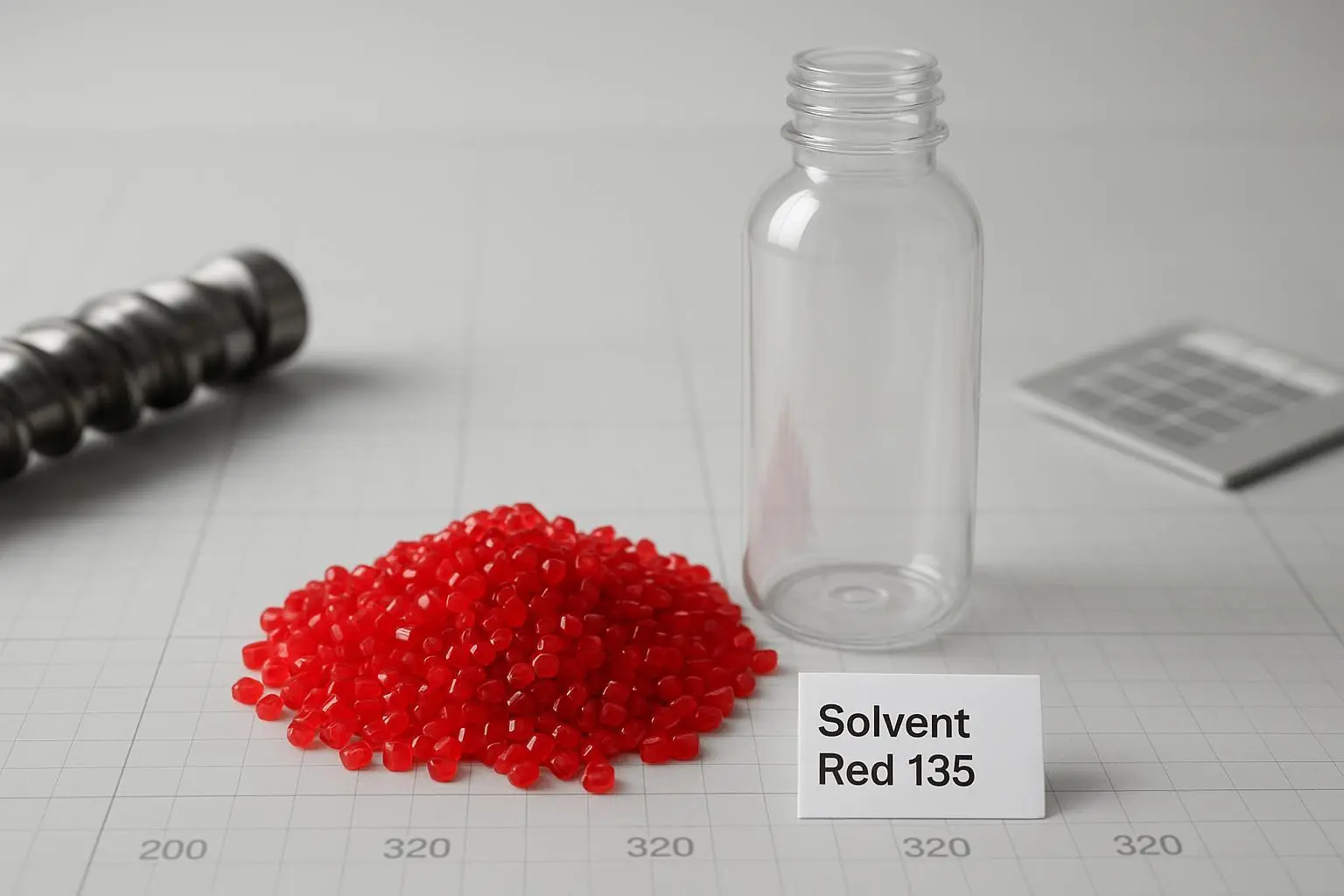
Solvent Red 135 for Transparent Red in PS/ABS/PC/PET: A Technical Guide
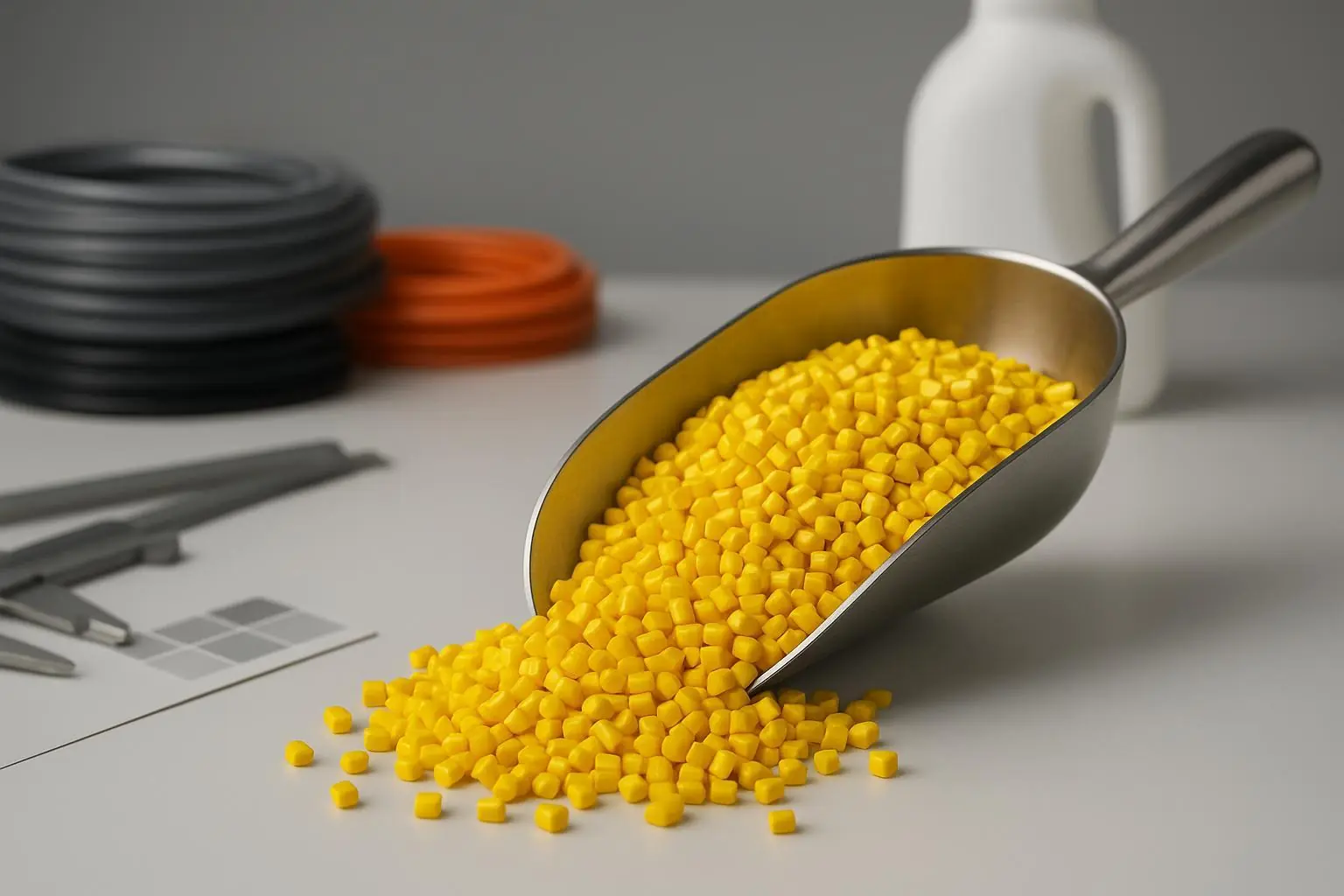
Pigment Yellow 13 (PY13) for Plastics: Properties, PVC/HDPE Performance, and HP YELLOW 1342 Notes
Pigment Yellow 74 is one of the most widely specified organic yellows in modern coatings because it combines a bright greenish‑yellow shade with high tinting strength and flexible grade design. In this guide, you’ll get a practical view tailored to coatings: what PY74 is, which properties matter in paint films, how transparent and opaque grades behave, and where it performs best—from architectural latex to air‑dry industrial enamels—along with clear limits for baking systems.
What Pigment Yellow 74 is
Pigment Yellow 74 (often abbreviated PY74) is the Colour Index name for a monoazo (arylide) yellow identified as C.I. 11741, commonly associated with CAS 6358‑31‑2. The Colour Index naming convention exists so manufacturers and users can match pigments across suppliers by chemical identity rather than trade names; a helpful overview of how CI names work is provided in the 2021 explainer on the pigment Colour Index system by Jackson’s Art in “Everything you need to know about the Pigment Colour Index” (2021), which clarifies why PY74 consistently denotes this family across the industry. See the background in the Colour Index discussion here: the article “Everything you need to know about the Pigment Colour Index” by Jackson’s Art (2021) explains the naming scheme and best practices for cross‑referencing pigments in procurement and formulation, including how families like PY74 are cataloged — consult the overview in the Jackson’s Art blog for a plain‑language reference: What is the Pigment Colour Index?.
In practical terms for coatings, PY74 offers a bright, greenish‑yellow hue, strong strength at low loading, and grade variants that span from highly transparent to significantly opaque. Those levers let formulators target gloss, clarity, and hiding power without changing pigment chemistry.
As a member of the broader family of pigmenți organici, PY74 is favored in both inks and paints; this article focuses solely on coatings applications and selection.
Key properties for coatings formulators
Selecting a Pigment Yellow 74 grade is ultimately a paint‑film decision, not a powder‑in‑a‑bag decision. Several properties are especially relevant, and all are grade‑dependent. In comparative work, anchor your approach to consistent methods. ISO 787 provides a common language for pigment evaluation in areas like light resistance (part 15) and color in full shade (part 25). Title pages and the standards index are available via the ISO Online Browsing Platform and BSI Knowledge: ISO 787 series index and BSI Knowledge page for ISO 787‑15.
Lightfastness in paint films
Many market TDS reference lightfastness using Blue Wool–style scales or ISO‑aligned methods. For example, in a representative data sheet for a PY74 grade, DCL’s Hansa Yellow 74 “2574” cites masstone lightfastness reported in the 7–8 range with a typical tint value around 6, which aligns with practical expectations for coatings applications when properly formulated. The same document also provides the paint‑film heat stability context noted below. See details here: DCC/DCL 2574 Hansa Yellow 74 TDS.
Heat stability in coated films
The DCL 2574 resource documents paint‑film heat stability on the order of about 140 °C for that grade. Treat such values as guidance: verify against your binder, bake schedule, and film thickness. For labs that need an instrumental framework for color and permanence in dispersion systems, ASTM D5098 is a commonly cited reference point for consistent setups: ASTM D5098 standard landing page.
Solvent and chemical resistance
Resistance varies with grade finishing and surface treatment. Plan to verify with in‑system spot tests and rubs; one set of conditions can look excellent while another reveals migration or softening. Maintain identical solvent panels and dwell times when you compare suppliers.
How grade design drives performance in paints
PY74’s behavior in coatings is governed by familiar pigment design levers. Specific surface area and particle size form the main slider: finer particles (higher surface area) raise tinting strength and transparency, support a clearer, cleaner shade, and promote higher gloss in high‑sheen systems. Coarser particles (lower surface area) shift the shade slightly warmer/redder, boost hiding power, and can improve practical lightfastness in films. Surface treatment and finishing add control over dispersion, flocculation resistance, and solvent sensitivity, while also tuning rheology at useful pigment loadings.
Think of Pigment Yellow 74 grades as a continuum between clarity and opacity. Slide toward fine/transparent when you want high gloss and crisp color in clean pastels; slide toward coarse/opaque when you need hiding and coverage without resorting to inorganic blends. Always confirm with your drawdowns and gloss measurements at target DFT.
Transparent and opaque PY74 — a quick selection guide
Transparent PY74 grades are a strong fit when you need clarity, high gloss, and very high strength at low loading—e.g., clean pastels in architectural latex or clearcoats in industrial systems that don’t demand strong hiding. The trade‑offs are predictable: lower inherent hiding and higher sensitivity to letdown viscosity and flocculation; in some systems, alcohols and certain solvents can reduce stability if dispersant and grind are not optimized.
Opaque PY74 grades excel when stronger hiding and practical coverage are priorities, such as replacing legacy chrome yellow in air‑dry alkyd or nitrocellulose (NC) enamels, or boosting opacity in universal architectural paints. Expect a slightly redder shade versus fine grades and marginally lower brightness; remember it’s still an organic pigment, so don’t expect the chalky hiding of high‑loading inorganics at equal PVC.
Coatings applications for Pigment Yellow 74
Architectural latex tinting and cost performance
In architectural latex, Pigment Yellow 74 shines—especially in pastels—because its high tinting strength delivers target shades at low dose, supporting cost/performance and gloss retention. When you build tint bases for interior or exterior acrylic emulsions, PY74 helps you reach clean, greenish yellows and warm creams without muddying. To browse category context designed for paint formulators, see pigments for coatings.
Practical checks for latex systems: Establish a robust millbase with an anionic or nonionic dispersant compatible with your resin. Verify color strength and undertone at your TiO2 ratio (e.g., 1/10 or 1/20), then confirm contrast ratio and 60° gloss at your target film build. If haze creeps in at low PVC, adjust the grind or co‑dispersant package to suppress flocculation and maintain a smooth viscosity profile across the shear curve. For exterior lines, screen one fine and one opaque PY74 grade in parallel—opaque/coarser variants sometimes show better practical weather hold in paint films despite similar nominal lightfastness numbers.
Air‑dry alkyd and NC industrial — chrome yellow replacement and cost optimization
For general‑purpose industrial enamels that air‑dry (alkyds, NC blends, some single‑pack acrylics), opaque PY74 grades are proven workhorses. The logic is straightforward: a coarser, lower‑specific‑surface PY74 boosts hiding, lets you cut TiO2 or reduce total pigment volume at equal coverage, and avoids chromate yellows. Directories from global pigment suppliers position these opaque grades primarily for architectural and universal paints, which is consistent with their strong hiding and good dispersion in typical solvents.
A concise workflow for conversion: Benchmark your legacy chromate enamel at equal DFT on a standard contrast card. Build an alkyd enamel with an opaque PY74 grade; tune PVC so your contrast ratio meets target without destabilizing viscosity, and log 60°/20° gloss for finish quality. Optimize dispersant and grind to achieve a stable millbase; NC systems are sensitive to shear history, so hold a constant grind curve during trials. Confirm solvent and plasticizer resistance with spot/rub tests, then validate flow and leveling through your temperature window. While PY74 won’t match chromate’s raw hiding per unit mass, its high tinting strength and favorable rheology often deliver comparable visual coverage at competitive cost in air‑dry systems.
Automotive refinish and baking systems — boundary conditions and alternatives
Here’s the deal: Pigment Yellow 74 can serve in refinish primers or topcoats that avoid elevated bake schedules, but it isn’t the first choice when you need robust color hold at higher bake temperatures. Representative technical data sheets document paint‑film heat stability for some PY74 grades at around 140 °C; above that, treat performance as test‑defined. Build a panel matrix across your actual bake cycle (time × temperature) to quantify color shift and gloss loss before committing. If your program requires powder coating or high‑temp OEM bakes, evaluate alternative yellow chemistries designed for those peaks. For an adjacent view of technology areas that often require different pigments, see powder coatings.
PY74 versus PY12 in coatings
Formulators often compare Pigment Yellow 74 and Pigment Yellow 12 because both are monoazo yellows with broad availability. Directionally in coatings, PY74 typically presents a clean, greenish yellow; opaque/coarser PY74 variants can appear a touch warmer than fine transparent grades, while PY12 families are commonly referenced around lemon‑yellow shades with different undertone behavior. PY74 is generally stronger in tint than commodity monoazo yellows. Literature and vendor directories consistently position PY74 as a high‑strength option for architectural and universal paints, while PY12 is frequently chosen on cost for less demanding conditions. Opaque PY74 grades provide useful hiding and often better practical weathering in paint films than common PY12 options; however, results are system‑ and grade‑dependent, so confirm with your own panels.
Practical formulation and testing notes
A consistent method beats a heroic grind. To compare Pigment Yellow 74 grades fairly, lock a reference millbase viscosity and letdown protocol; adjust only the pigment variable in early screens. Use ISO‑anchored comparative methods for light resistance and full‑shade color (see ISO 787 series index and ISO 787‑15 title page cited above). Instrumental color measurement frameworks referenced in ASTM permanence discussions (see ASTM D5098 landing page) help maintain apples‑to‑apples instrument geometry and settings across panels. Evaluate contrast ratio at two DFTs bracketing your production film build; add a quick solvent rub test for surface migration checks; and record gloss and haze alongside delta E after accelerated exposure so you don’t trade color for appearance. Two process habits pay off quickly: photograph drawdowns under controlled light (D65 if available) and maintain a master panel library per binder family.
Product micro‑examples from Honor Pigments
When you move from theory to sourcing, you’ll often shortlist one transparent and one opaque grade to bracket performance in your systems. For example, at Pigmenți de onoare, a transparent PY74 such as HP YELLOW 1473 is positioned for applications where clarity and strength at low loading are valued, while an opaque PY74 like HP YELLOW 1659 is positioned for coatings that need stronger hiding and practical coverage in architectural or air‑dry industrial systems. Selection should be confirmed with your millbase, dispersant package, and PVC targets; treat these as starting points for lab screening rather than prescriptive specifications.
Summary — where Pigment Yellow 74 fits best
Pigment Yellow 74 is at its best in architectural latex pastels and mid‑tones that benefit from high tinting strength with clean, greenish‑yellow hues. It’s also a strong option in air‑dry alkyd and NC enamels aimed at replacing chromate yellows while maintaining gloss and coverage through smart PVC and rheology control. In automotive refinish systems that avoid high‑temperature bakes, PY74 can be a fit; for elevated bake schedules or powder coating, evaluate alternative yellow chemistries.
References and method anchors cited in text
Colour Index background and naming conventions discussed by Jackson’s Art in 2021: What is the Pigment Colour Index?
DCL/DCC technical data for a representative PY74 grade, citing lightfastness ranges and paint‑film heat stability around 140 °C: DCC/DCL 2574 Hansa Yellow 74 TDS
ISO methods index for pigments and extenders, including ISO 787‑15 on comparative light resistance and ISO 787‑25 on full‑shade color: ISO Online Browsing Platform — ISO 787 index and BSI Knowledge page for ISO 787‑15
ASTM permanence framework cited for instrument setups in coatings labs: ASTM D5098 landing page
 English (UK)
  Español
  Português
  Français
  Русский
  Türkçe
  العربية
  Bahasa Indonesia
  한국어
한국어  Čeština
  Nederlands
  עִבְרִית
  Ελληνικά
  日本語
日本語  Italiano
  Português do Brasil
  Deutsch
  Română
  Español de Argentina
  Irish
Irish  Español de Colombia
  Dansk
Dansk  Қазақ тілі
  Монгол
  Español de México
  O‘zbekcha
  Shqip
Shqip