
Optical Brightener OB for Industrial Coatings Ultimate Guide
Pigment Red 112 for Waterborne Coatings: The Practical Guide

Pigment Red 53:1 for Plastics (HP RED 2537) — 2026 Review
Pigmento Amarelo 13 para tintas de flexografia e gravura: Propriedades, CQ, Conformidade
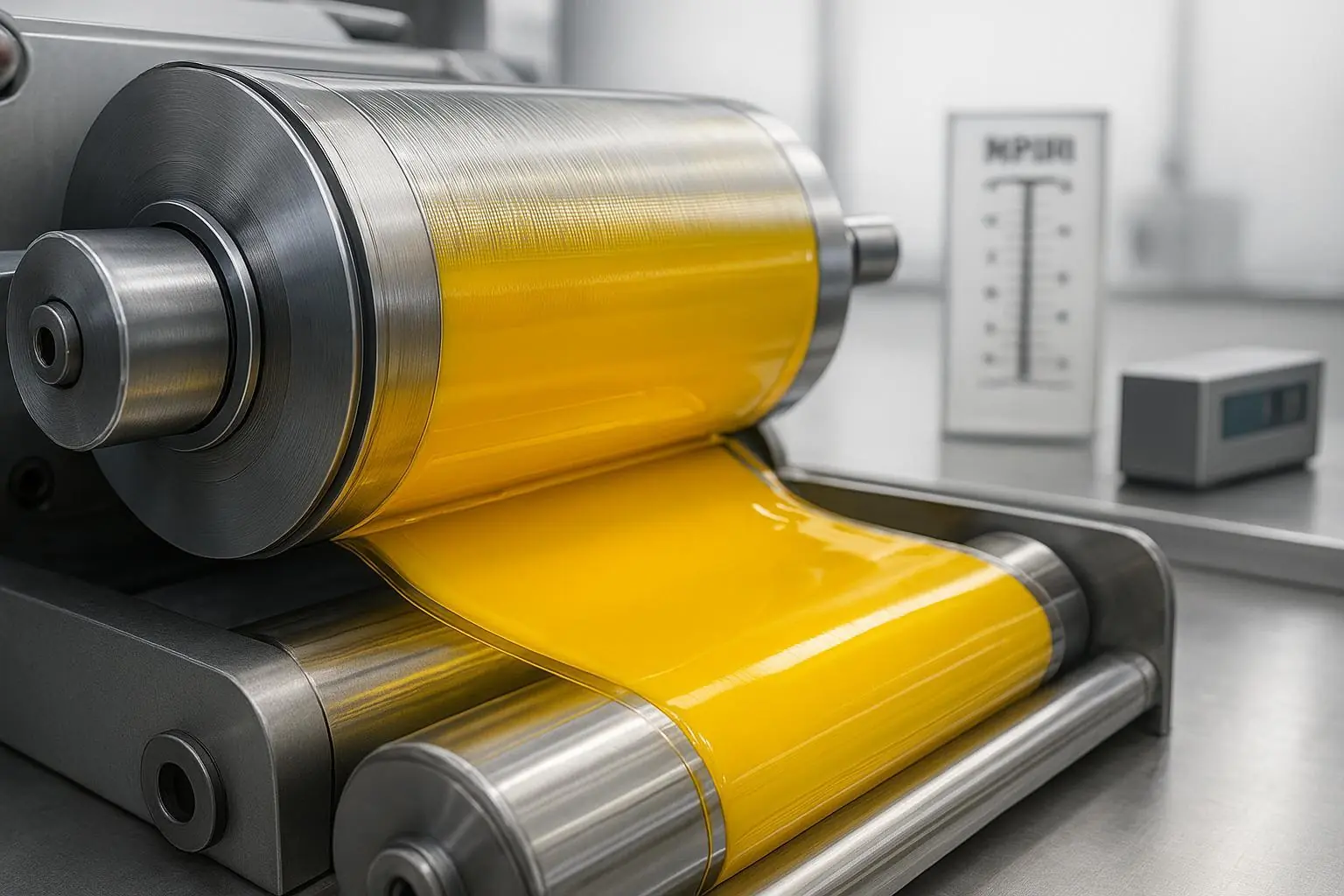
Pigmento Amarelo 14 para tintas de rotogravura e flexografia à base de solvente: Alto fluxo e alto brilho em películas e papel
Pigment Yellow 83 is a diarylide (disazo) red‑shade yellow widely specified across printing inks, plastics masterbatch, and industrial coatings when buyers need strong color strength, stable shade control, and dependable fastness at moderate processing temperatures. This guide explains what PY83 is, how labs actually measure “fastness,” where it typically excels, and what procurement teams should request from suppliers to de‑risk selection.
Pigment Yellow 83: identity and chemistry
PY83 is formally indexed as C.I. Pigment Yellow 83 (C.I. 21108), a diarylide (disazo) organic pigment synthesized from biphenyl‑based diarylide coupling components. Its molecular formula is C36H32Cl4N6O8, with common procurement identifiers CAS 5567‑15‑7 and EC/EINECS 226‑939‑8. Authoritative registries include the NIH’s PubChem entry for C.I. Pigment Yellow 83, which lists structure and identifiers, and the European Chemicals Agency public search portal used for REACH lookups:
PubChem identity & structure reference: PubChem’s C.I. Pigment Yellow 83 record (CID 21733).
EU regulatory lookup (search CAS 5567‑15‑7 or EC 226‑939‑8): ECHA Information on Chemicals portal.
Diarylide structure is closely tied to performance: PY83 grades are known for high tinting strength and a clean red‑shade yellow hue. Particle size control and surface treatment can push grades toward higher transparency (inks, metallic finishes) or higher opacity and durability (industrial coatings). Like other diarylides, long‑term high‑heat exposure in polymers can risk color change or decomposition; conservative processing windows are addressed below.
Identifier | Valor | Typical use in procurement |
|---|---|---|
CAS | 5567‑15‑7 | Contracts, SDS/TDS cross‑checks |
EC/EINECS | 226‑939‑8 | REACH portal queries |
Color Index | C.I. 21108 | Shade family confirmation |
Formula | C36H32Cl4N6O8 | Identity confirmation in databases |
How labs report “fastness”: the methods that matter
Lightfastness (resistance to fading) is commonly communicated using the Blue Wool reference scale (BW 1–8) within xenon‑arc exposure methods. In textiles, the canonical method is ISO 105‑B02; pigment suppliers frequently borrow the same BW language when summarizing lightfastness for inks, plastics, and coatings even if the exact apparatus or substrate differs. Two concise, authoritative starting points are the ISO 105‑B02 overview page and the Society of Dyers and Colourists’ historical/technical note on the Blue Wool Scale. In procurement terms, BW5 is often treated as a minimal indoor baseline where some fading is acceptable, BW6 as a “good” level for many general applications, and BW7–8 as very good to excellent for demanding or longer‑life uses—always method, substrate, and concentration dependent.
Solvent and rub resistance in coatings and inks is typically screened by double‑rub practices. For organic coatings, industry commonly references ASTM D5402, which specifies test solvents (e.g., MEK), cloth type, test load, and how to count double rubs. When you add solvent‑resistance language to a purchase spec, cite the method and parameters rather than only saying “MEK resistant.” For details, see: ASTM D5402 solvent rub practice for organic coatings.
Note on typical vendor data: Some public technical data sheets communicate lightfastness qualitatively or in matrix‑agnostic tables. For example, an artist‑media data sheet lists PY83 lightfastness as BW5 in full shade and BW8 at 1/3 SD reductions, which illustrates how concentration affects ratings but is not an end‑use matrix value. See this illustrative reference: Kremer Pigmente PY83 data sheet.
PY83 properties by application
Because performance depends on grade, dispersion state, binder/polymer, and concentration, treat the following as typical windows to guide screening—not as universal guarantees. Always confirm grade‑specific data in current TDS and your lab trials.
Inks (offset, gravure, flexo, screen; solvent‑based, water‑based, UV)
Shade/transparency: PY83 is a benchmark red‑shade yellow. Finer particle sizes and resin‑treated grades boost transparency for metallic inks and high‑gloss prints; coarser or less‑treated variants improve opacity and hiding.
Dispersion: Achieve stable dispersion with appropriate vehicles/wetting agents; control millbase viscosity and aim for a high, clean grind (e.g., Hegman 7+ in many systems). Watch for flocculation in low‑polarity solvents; use dispersant packages compatible with the resin.
Fastness expectations: Indoor graphics typically accept BW5–6 equivalents when printed at practical film weights; outdoor or long‑term labels/posters often require BW6+ targets and weathering checks.
Acceptance tests to specify: Xenon‑arc exposure with Blue Wool references; solvent rub per ASTM D5402 where relevant; abrasion tests as needed.
Micro‑example (solvent‑based gravure ink, red‑shade yellow): You need a transparent red‑shade PY83 with strong tinting and stable viscosity. Shortlist grades offered for solvent systems; request drawdowns at equal pigment volume concentration and BW references from xenon‑arc tests. If you want a concrete benchmark example, HP YELLOW 1576 (PY 83) is positioned for printing‑ink systems. Validate with your own millbase and rub/light tests before approval, and consider an internal alternate supplier for dual‑sourcing.
Plastics (PVC, HDPE/PP, ABS, PMMA, unsaturated polyester)
Heat stability: Industry literature for diarylide PY83 commonly points to a conservative long‑term processing ceiling around 200 °C in polyolefins; short‑term peaks may be tolerated but should be validated with dwell‑time defined. A vendor TDS example specifies 199 °C stability for PY83 in HDPE and paints; use this as a conservative screening target and verify in your polymer and residence‑time profile. See: DCL 2583 PY83 technical data sheet noting ~199 °C stability.
Migration/bleed: PY83 grades are often selected for PVC where migration limits apply, but performance varies by surface treatment and plasticizer. Screen with contact migration tests under your plasticizer package and service temperature.
Loading and form: Work with powder pigments, predispersed concentrates, or masterbatch depending on the line. For HDPE/PP, small, well‑stabilized particles reduce plate‑out and improve color development. As an example of a plastics‑oriented PY83 grade, see Honor Pigments’ HP YELLOW 1369 (PY 83) and confirm suitability in your polymer and processing profile.
Coatings (industrial, auto OEM/refinish, wood, architectural)
Opacity vs transparency: Particle‑size control defines whether PY83 behaves as a transparent bright yellow for high‑gloss finishes or as a semi‑opaque workhorse for hiding and durability. In metallic or effect coatings, transparent grades maintain flop and metallic sparkle.
Weathering and recoat: Specify lightfastness targets using Blue Wool language and define recoat resistance where multi‑layer stacks are used to avoid bleeding/floating. For solvent resistance, reference ASTM D5402 with a defined solvent (e.g., MEK) and a target number of double rubs.
Bake windows: For stoving/industrial bakes, qualify color stability versus your bake schedule; diarylides can shift if overheated or over‑dwelled. If you need supplier examples by hiding level, HP YELLOW 1688 (PY83) is positioned as a high‑opacity option e HP YELLOW 1680 (PY83) as a semi‑opaque option—verify with standardized drawdowns in your binder.
How Pigment Yellow 83 compares to adjacent yellows
Use this qualitative matrix as a screening guide; hue bias and fastness vary by grade and system, so always confirm with spectral data and standardized drawdowns.
Pigment (CI) | Typical shade tendency | Transparency tendency | Typical fastness tendency | Common niches |
|---|---|---|---|---|
PY83 (21108) | Red‑shade yellow | Available from transparent to semi‑opaque (grade‑dependent) | Good to very good lightfastness at practical loadings; conservative heat limit near 200 °C in polyolefins | General workhorse across inks, plastics, industrial coatings |
PY13 | Often redder/orange‑leaning within diarylides | Often more transparent in ink grades | Similar class behavior; grade‑dependent lightfastness | Deep orange‑leaning inks, special shades |
PY74 | Greener/cleaner mid‑yellow | Frequently transparent in ink/coating grades | Good indoor durability; outdoor depends on grade | Clean mid‑yellow prints; blend component with PY83 for target hues |
PY10 | Lemon/mid‑yellow alternatives | Varies | Often lower high‑heat tolerance than HPP yellows; grade‑dependent | Economical mid‑yellow shades, short‑term applications |
Troubleshooting quick notes (symptom → likely cause → action)
Dull or muddy yellow in solvent inks → Over‑milling or flocculation; dispersant/resin mismatch → Re‑optimize dispersant and let‑down ratio; check grind and adjust particle size distribution.
Bleed during recoat in coatings → Incompatible solvent in top layer or insufficient cure → Specify D5402 rub resistance and recoat timing; adjust solvent balance or bake schedule.
Color shift in molded polyolefins → Overheating (>200 °C) or prolonged residence time → Lower melt temperature, shorten dwell, or shift to a grade stabilized for your profile; confirm with plaque trials.
Frosting/migration in PVC → Plasticizer interaction or insufficient surface treatment → Switch to a treated grade and validate with contact migration tests at end‑use temperature.
Procurement checklist and regulatory lookup guide
Use this compact checklist to standardize supplier evaluations:
Identity and compliance: Confirm CAS 5567‑15‑7, EC 226‑939‑8, and CI 21108 on SDS/TDS; cross‑check in the ECHA Information on Chemicals portal. If your market requires it, request REACH status or equivalent documentation.
Test methods and targets: Ask for lightfastness reported against Blue Wool references (xenon‑arc) and solvent resistance by a named method (e.g., ASTM D5402 with solvent and target double rubs). For plastics, specify your polymer, residence‑time profile, and target processing ceiling; request plaques and delta‑E acceptance limits after heat exposure.
Application data: Request standardized drawdowns (inks/coatings) and plaques (plastics) at matched pigment volume concentration and film build. Where relevant, run recoat/migration checks.
Quality documentation: Batch COA with colorimetric tolerances, particle size distribution (if disclosed), and moisture/volatiles. Define acceptance criteria in the PO.
Sourcing resilience: Qualify at least two grades from independent suppliers for dual‑source security. For category context, you can survey supplier offerings via a targeted category overview such as the internal page for pigments used in printing systems: Pigments for Printing Inks category on HonorPigment.com.
Frequently asked questions
Is Pigment Yellow 83 food‑contact safe? Some commercial grades may be formulated to meet applicable regulations, but approvals are grade‑ and use‑specific. Always verify with supplier declarations of conformity and perform migration testing under your end‑use conditions.
What Blue Wool number should I target? For many indoor applications, BW6 is a practical baseline; demanding outdoor or high‑exposure uses may require BW7–8 targets and method‑appropriate weathering.
Can PY83 handle 250 °C processing? Short peaks might be tolerated depending on grade and dwell time, but diarylides are generally validated around 200 °C for sustained processing in polyolefins. Confirm with plaques tested to your thermal profile.
How do I choose between PY83 and PY74? PY83 leans red and is offered in more opaque industrial variants; PY74 is typically cleaner/greener and often more transparent. Pick based on target hue, opacity, and durability, then verify with standardized tests.
Thanks for reading. If you need datasheets, compliance pointers, or lab screening tips for Pigment Yellow 83 grades, feel free to request TDS/SDS and sample drawdowns from your shortlisted suppliers; many buyers also explore a PY83 option from the neutral example cited above when benchmarking grades.
 English (UK)
  Español
  Português
  Français
  Русский
  Türkçe
  العربية
  Bahasa Indonesia
  한국어
한국어  Čeština
  Nederlands
  עִבְרִית
  Ελληνικά
  日本語
日本語  Italiano
  Português do Brasil
  Deutsch
  Română
  Español de Argentina
  Irish
Irish  Español de Colombia
  Dansk
Dansk  Қазақ тілі
  Монгол
  Español de México
  O‘zbekcha
  Shqip
Shqip