
Pigment Red 112 for Waterborne Coatings: The Practical Guide

Pigment Red 53:1 for Plastics (HP RED 2537) — 2026 Review
Pigment Yellow 13 for Flexo & Gravure Inks: Properties, QC, Compliance
Pigment Yellow 14 for Solvent-Based Gravure and Flexo Inks: High Flow and High Gloss on Films and Paper
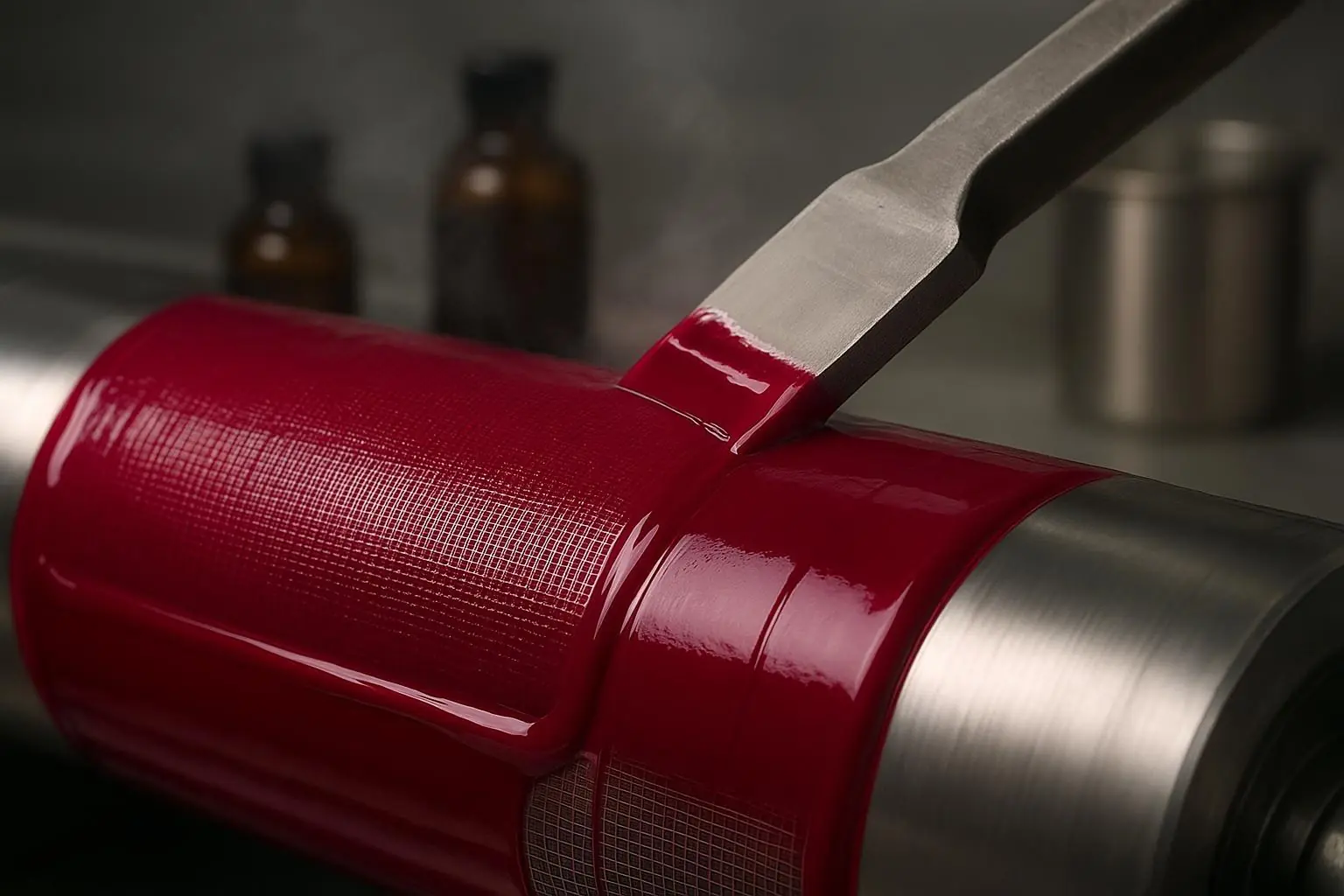
Pigment Red 48:2 for solvent-based inks in gravure printing — properties, resistance, and formulation considerations
Optical Brightener OB—formally C.I. Fluorescent Brightener 184, CAS 7128-64-5—is a workhorse additive that nudges white and clear coatings toward a crisper, cooler appearance. By converting near‑UV energy into blue‑violet emission, it offsets residual yellowness from binders, substrates, and aging, improving perceived whiteness in white, pastel, and clear films. This guide focuses on industrial coatings performance and formulation first, then maps the essentials of compliance so you know when claims are solid and when validation is required.
Chemical identity and optical behavior basics
C.I. Fluorescent Brightener 184 is a benzoxazole‑based brightener (often called BBOT) with the IUPAC name 2,5‑bis(5‑tert‑butyl‑2‑benzoxazolyl)thiophene. Typical identifiers include CAS 7128‑64‑5 and the formula C26H26N2O2S. It appears as a pale yellow to greenish‑yellow powder with a melting range commonly reported around 196–203 °C. Canonical identity references include structured listings from suppliers and registries such as PubChem and TCI, which document synonyms and properties in line with coatings‑grade material descriptions. See the PubChem registry overview in Fluorescent Brightener 184 and TCI’s substance page for cross‑checked identifiers.
On the optical side, OB‑184 absorbs near‑UV (roughly below 400 nm) and typically emits around the blue‑violet band. Vendor spectra frequently place absorption maxima near 374–375 nm and emission near 434–435 nm measured in organic media like ethanol. Real films can shift these numbers slightly due to solvent, resin polarity, and concentration effects, so treat published peaks as orientation rather than absolute values. Representative vendor summaries and mechanistic context are available in sources like Raytop’s product notes, Sinophor OB summaries, and an ACS Applied Polymer Materials article that discusses benzoxazole emissive behavior more generally.
Example identity references: PubChem entry for Fluorescent Brightener 184 and TCI’s B1554 substance page
Spectral behavior background: Raytop OB pages and Sinocure’s Sinophor OB summary, with mechanistic context from ACS Applied Polymer Materials 2024
How OB works in paint films
Think of OB as a subtle blue highlighter that only lights up when UV is present. It absorbs near‑UV photons and re‑emits blue‑violet light, visually canceling a yellow cast. In white coatings that rely on TiO2 for opacity and brightness, OB complements scattering with fluorescence, pushing the shade toward a clean, cool white. In clear coats, small additions can make substrates look brighter and less aged—provided you do not over‑blue and you validate clarity.
A few interactions are worth screening early:
Titanium dioxide synergy: TiO2 enhances brightness and opacity via scattering; OB adds a fluorescent component, which can read as “whiter than white.” Too much OB, however, can skew the shade or create an unnatural blue under UV‑rich lighting.
UV absorbers and HALS: Packages that protect films outdoors can attenuate OB’s excitation band. If you pair benzotriazole or benzophenone UV absorbers with OB, expect reduced fluorescence; test under the intended spectrum and dose accordingly. HALS primarily act on radical pathways and are less likely to quench directly, but full package interactions should still be validated.
Pigment and dye systems: Strong tints may mask OB’s effect; pastels usually benefit most. In high‑chroma systems, OB is often unnecessary and can introduce metamerism.
Recommended use levels and incorporation by coating type
Here’s the deal: start lean and earn your way up. For industrial coatings, practical lab starting points are conservative and require ladder testing.
General starting range: 100–500 ppm total formula basis, equivalent to about 0.01–0.05 wt%. If the benefit plateaus or you see blue bias, step down. If the film still reads warm after initial testing, you can step up in small increments. As an upper bound for trials, 0.1 wt% is a reasonable ceiling for many systems; beyond that, risks of haze, saturation, or odd metamerism typically outweigh gains.
Incorporation methods by system
Solventborne coatings: Pre‑dissolve OB‑184 in a compatible solvent or plasticizer and add at let‑down, or incorporate in the grind if your pigment vehicle can solubilize it. Ensure complete dissolution to avoid specking; a short hold with moderate shear helps.
UV‑curable systems: Add directly to the oligomer/monomer mix and screen against your photoinitiator package. Because OB absorbs near the UV‑A band, confirm that it doesn’t shadow initiator absorption. Validate under the exact lamp spectrum and dose.
Waterborne coatings: OB‑184 is not water‑soluble. Use a co‑solvent approach or prepare a high‑solids concentrate in a water‑miscible carrier. Surfactant‑assisted dispersion or emulsified delivery can work, but stability varies by resin chemistry. Patent literature outlines aqueous incorporation strategies; pilot‑scale stability checks are mandatory.
Validation guidance
Always specify your target whiteness or CIE Lab* target and ΔE tolerance before running ladders. Measure gloss and haze in clear coats to ensure the fluorescent boost doesn’t cost clarity. For heat‑cured systems, measure before and after bake to catch any early fluorescence loss.
Performance validation plan without guesswork
Set up a compact matrix and measure what matters:
Color metrics: Use ASTM D2244 to calculate color differences and report ΔE2000 where appropriate. Pair with ASTM E313 for whiteness and yellowness indices. For white and pastel paints, track both WI and ΔE change vs. a retained control.
Photostability: If outdoor or UV‑intense lighting is in scope, run accelerated exposures such as ASTM G154 QUV or ASTM G155 Xenon arc, or the ISO 4892 series. Monitor fluorescence retention via UV‑Vis or a blue emission intensity proxy and correlate to ΔE and WI drift across hours or cycles.
Thermal history and bake stability: For bake or IR‑cure systems, subject coated panels to your real curing schedule and a realistic over‑bake margin. Compare pre‑ and post‑bake shade and fluorescence.
Optical side effects: In clear coats, record haze, clarity, and gloss; in pigmented whites, watch for over‑blueing that appears under D65 but looks different under warm retail lighting. A simple dual‑illuminant check helps catch metamerism.
Helpful references for methods include the ASTM paint and coating standards overview and Q‑Lab’s guidance pages for UV and weathering equipment, which outline practical exposure setups and controls.
QA and specification checklist you can use
Build your supplier and batch files so qualification moves faster and stays auditable. These fields are typical for OB‑184 in coatings supply; values are illustrative and may vary by vendor and lot.
Document or test | What to request or measure | Typical notes for OB‑184 |
|---|---|---|
SDS | Current region‑specific SDS | Confirms hazard class, handling, and labeling |
TDS | Identity plus key properties | CAS 7128‑64‑5, C.I. FB 184, melting 196–203 °C, solubility notes |
UV–Vis | Absorption and emission maxima | Abs ≈ 374–375 nm, Em ≈ 434–435 nm measured in organic medium |
COA | Assay, moisture, ash, fineness, shade index | Assay ≥98–99.8%, moisture ≤0.5%, ash ≤0.5%, >200 mesh, blue‑white shade vs standard |
Batch uniformity | Tint or shade delta vs internal standard | Define ΔE acceptance, e.g., ≤1.0–2.0, premium ≤0.5 |
Whiteness targets | WI and ΔE specs for your SKU | Record illuminant and geometry to ensure apples‑to‑apples |
Stability tests | QUV or Xenon and bake stability checks | Record hours/cycles, irradiance, temperature, post‑exposure ΔE/WI |
For identity and property cross‑checks, see registry resources such as the PubChem entry for Fluorescent Brightener 184 and supplier summaries that publish melting point and assay ranges. For color and appearance metrics, see ASTM’s collection of paint and color standards.
Regulatory and compliance navigator FDA and EU basics
Food contact is where claims go from convenient to consequential. Separate non‑food industrial coatings from any packaging or FCM proposal and document your basis either way.
United States snapshot
FDA 21 CFR indirect additives: During our checks, we did not find an explicit eCFR clause that names Fluorescent Brightener 184 by CAS with conditions of use for polymers or coatings in Parts 175–178. We also did not locate an effective Food Contact Notification covering CAS 7128‑64‑5 in FDA’s FCN inventory. Therefore, treat any blanket “FDA compliant” statements for OB‑184 as unverified unless you can cite a specific effective FCN or another lawful pathway that matches your intended use and conditions. You can review examples of FCNs in FDA’s inventory to understand format and scope.
European Union snapshot
EU plastics regulation 10/2011: OB‑184 is not on the Union list Annex I for plastic food‑contact materials in the consolidated text. Without a positive listing, it is not authorized as an additive for plastic FCMs under 10/2011. If a supplier proposes use via risk assessment in non‑plastic layers or in non‑food‑contact coatings, document the regulatory logic and testing.
Paper and board
BfR Recommendation XXXVI provides national guidance for paper and board. It requires that optical brighteners used in paper and board do not migrate to food, typically demonstrated by standardized tests such as DIN EN 648 achieving an evaluation score of at least 5. This recommendation does not itself authorize OB‑184 for plastics or coatings.
REACH and regional frameworks
Confirm REACH registration status and SVHC screening via the ECHA portal. Maintain region‑specific compliance files for UK REACH, K‑REACH, and others as applicable.
Primary references to consult include the EU 10/2011 consolidated text on EUR‑Lex, BfR Recommendation XXXVI for paper and board, the FDA FCN database, and ECHA’s substance information portal.
Case patterns and quick troubleshooting
Patterns from field practice can help shape your test plan.
Architectural white enamel indoors: Start around 150–300 ppm. Expect a measurable WI lift and a modest ΔE decrease vs. the base white. If yellowing rebound shows up after UV exposure, pair a light UV absorber and validate that you still get enough OB excitation under your lighting.
Industrial clearcoat tracer use: At 50–150 ppm, OB can act as a tracer under 365–395 nm UV, making film uniformity checks quick on the line. Verify there’s no haze or gloss penalty at your film builds.
Powder coating bake stability: Ladder 0.02–0.08 wt% through your cure profiles at 160–200 °C for 10–30 minutes. Check fluorescence retention and ΔE immediately after cure and again after a short over‑bake to simulate process variance.
Troubleshooting cues
Diminished or no effect: Look for quenching by UV absorbers, excessive loading, or poor dissolution. Rework the incorporation path and check the lamp spectrum if UV‑cure.
Blue over‑tint: Step dosage down and balance with TiO2 grade or a minute amount of yellow tint. Always check under D65 and warm retail lighting to limit metamerism.
Yellowing after weathering: Add or rebalance the photostabilizer package. Validate across QUV or Xenon cycles and watch WI retention and ΔE drift.
Supplier documentation checklist for faster qualification
Procurement and QA can speed approvals by asking for the right artifacts from day one:
SDS aligned to destination market regulations
TDS with identity, melting range, typical λmax values, and recommended incorporation notes for coatings
Sample COA listing assay, moisture or volatiles, ash, fineness, and shade index against a retained standard
Batch‑uniformity statement with tint or shade variance controls and target ΔE between lots
Regulatory statements, including REACH registration and SVHC status, any region‑specific declarations, and explicit FDA or EU 10/2011 basis only if a primary citation or effective FCN exists for your intended use
Suppliers such as Honor Pigments can provide SDS, TDS, and sample COA packages on request to support coatings qualification workflows. Keep these in your supplier scorecard, retain batch retains for ΔE and whiteness comparisons, and link test panels to each COA for traceability.
References and further reading
Identity and structure overview in the PubChem registry for Fluorescent Brightener 184 provides cross‑checked identifiers and links to related datasets: see PubChem’s Fluorescent brightener 184 page.
TCI’s substance entry for BBOT lists synonyms, molecular data, and catalog context consistent with coatings‑grade material identity.
For spectral behavior context and typical λmax values reported in organic media, see vendor summaries such as Raytop’s OB‑184 notes and Sinocure’s Sinophor OB overview.
For paint and color measurement practices including whiteness and ΔE, consult the ASTM compilation of paint and coating standards.
For accelerated weathering method context, Q‑Lab’s guides to QUV and Xenon arc exposures outline practical test setups and controls used widely in coatings.
Cited links in context above
EU 10/2011 consolidated text on EUR‑Lex: https://eur-lex.europa.eu/legal-content/EN/TXT/?uri=CELEX%3A02011R0010-20241220
BfR Recommendation XXXVI paper and board for food contact: https://www.bfr.bund.de/cm/349/XXXVI-Paper-and-Board-for-Food-Contact.pdf
FDA Food Contact Notification inventory examples for format context: https://hfpappexternal.fda.gov/scripts/fdcc/index.cfm?set=FCN&id=1458
PubChem registry overview for Fluorescent Brightener 184: https://pubchem.ncbi.nlm.nih.gov/compound/Fluorescent-brightener-184
ASTM paint and coating standards overview: https://www.astm.org/products-services/standards-and-publications/standards/paint-standards-and-related-coating-standards.html
Q‑Lab overview of QUV weathering test equipment: https://www.q-lab.com/weathering/equipment-accessories/quv
Sinocure summary for Sinophor OB with typical spectral notes: https://www.sinocurechem.com/sinophor-ob.html
Raytop page with typical absorption and emission context for OB‑184: https://www.raytopoba.com/fluorescent-brightener-OB-184-for-plastics_176.html
 English (UK)
  Español
  Português
  Français
  Русский
  Türkçe
  العربية
  Bahasa Indonesia
  한국어
한국어  Čeština
  Nederlands
  עִבְרִית
  Ελληνικά
  日本語
日本語  Italiano
  Português do Brasil
  Deutsch
  Română
  Español de Argentina
  Irish
Irish  Español de Colombia
  Dansk
Dansk  Қазақ тілі
  Монгол
  Español de México
  O‘zbekcha
  Shqip
Shqip