
Pigment Red 112 for Waterborne Coatings: The Practical Guide

Pigment Red 53:1 for Plastics (HP RED 2537) — 2026 Review
Pigment Yellow 13 for Flexo & Gravure Inks: Properties, QC, Compliance
Pigment Yellow 14 for Solvent-Based Gravure and Flexo Inks: High Flow and High Gloss on Films and Paper
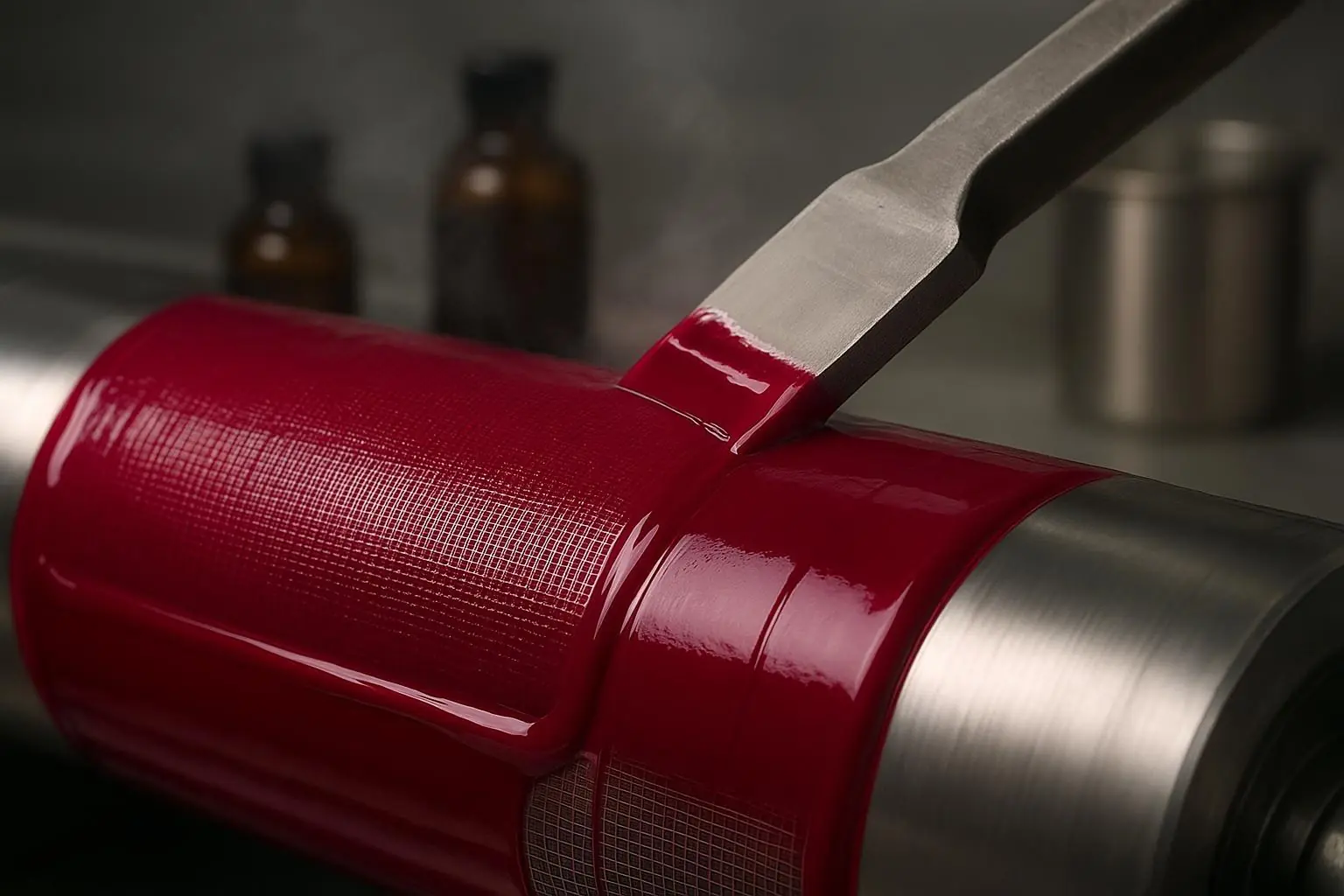
Pigment Red 48:2 for solvent-based inks in gravure printing — properties, resistance, and formulation considerations
If you’re formulating modern waterborne paints, Pigment Red 112 for waterborne coatings is a dependable route to a bright, medium-to-yellowish red with solid cost-to-performance. This guide distills what matters to get repeatable color, fast and stable dispersion in low-VOC, APEO-free systems, and durability that holds up in real jobs—across architectural walls and industrial metal.
Where Pigment Red 112 for Waterborne Coatings Fits
Pigment Red 112 (C.I. PR112) is a monoazo, naphthol-AS red known for vivid chroma and a slightly yellowish undertone that tints cleanly. It’s common in architectural latex and select industrial finishes where you need reliable color without moving to higher-cost quinacridones.
For chemical resistance context on a 1–5 scale, Vichem’s Quindo Red P.R.112 page lists typical resistances used by coatings formulators when screening grades: fastness and resistance table for P.R.112.
Key Properties and What They Mean in Paint
Different PR112 grades show different numbers, but certain ranges crop up across reputable sources. Density affects settling behavior; oil absorption points to the amount of resin needed to wet the surface; pH gives a feel for suspension behavior; and fastness values hint at exterior fitness. Avoid treating any single figure as universal—always confirm your grade’s TDS.
Typical ranges and their formulation implications referenced from commonly published supplier TDS summaries include density around 1.4–1.55 g/cm³, oil absorption around 40–50 g/100 g, aqueous pH near neutral, and heat stability that can reach 200 °C for limited bake exposure. Always verify your specific grade’s TDS.
Property | Typical range | Why it matters in waterborne paint | Source context |
|---|---|---|---|
Density | 1.42–1.55 g/cm³ | Heavier pigments settle faster; balance low-shear rheology and anti-settling | Typical supplier TDS summaries |
Oil absorption | 40–50 g/100 g | Higher values mean more binder/dispersant demand and potential viscosity rise | Typical supplier TDS summaries |
Aqueous pH (slurry) | ~6–8 | Near-neutral surface; responds well to mild alkalinity during grind | Typical supplier TDS summaries |
Heat stability | 140–200 °C (short exposure) | Adequate for many waterborne enamels; confirm with your bake profile | Typical supplier TDS summaries |
Lightfastness | 5–7 scale (grade- and shade-dependent) | Better in masstone than in pale tints; key for exterior work | Typical supplier TDS summaries |
Chemical resistance | Acid/alkali/alcohol often 4–5; oil ~3 | Helps predict cleaning resistance and maintenance cycles | Vichem resistance table |
Note on methods and scales: “Lightfastness” can refer to Blue Wool 1–8 or other scales; verify the scale in your source and bind your own testing to a standard exposure such as ASTM D4587 fluorescent UV cycles or ISO 16474-3. For fineness and end-of-grind checks, ASTM D1210 is the go-to Hegman method, and for color tolerance, ASTM D2244 provides ΔE and ΔE00 computation guidance. See the current ASTM listings for D1210 fineness of dispersion and D2244 color differences and tolerances. For accelerated weathering practice, reference ASTM D4587 fluorescent UV exposure.
How Pigment Red 112 for Waterborne Coatings Behaves
PR112 is hydrophobic with moderate oil absorption, so it benefits from strong polymeric dispersants that provide both electrostatic and steric stabilization in acrylic and styrene-acrylic systems. Under APEO-free and low-VOC constraints, common choices include polycarboxylate and advanced nonionic or polyurethane dispersants. You’ll often achieve faster color development and lower millbase viscosity when the dispersant anchors well to the pigment surface and extends a solvated chain into the continuous phase.
For context on aqueous dispersants and their fit in waterborne paints, consult a representative reference from additive suppliers that outlines chemistry and usage context: polymeric dispersants designed for aqueous systems.
Building a Stable Millbase and a Smooth Letdown
Aim to make a fast, stable grind that reaches color strength without over-shearing the system into re-agglomeration. Think of the millbase as the pigment’s “home” and the letdown as the “neighborhood” it must live in peacefully.
Millbase targets to anchor your lab work:
Pigment loading: For a concentrate-style grind, 60–70% pigment in the paste is common. If you grind directly into paint, total pigment in the millbase phase may run closer to 15–25% by weight depending on the formula.
Dispersant on pigment: Start around 0.3–1.0% active by weight for efficient polyacids. Hydrophobic copolymers or universal colorant approaches may call for more—always optimize per supplier guidance.
pH during grind: Maintain mildly alkaline conditions, typically 7.5–9.0, to maximize anionic dispersant performance and binder neutralization windows.
Fineness of grind: Target Hegman 6–7 (about 25–12.5 µm) or finer when high gloss and smoothness are critical; verify with ASTM D1210.
Defoaming: Dose a compatible defoamer early and at letdown. Validate in APEO-free systems to avoid microfoam or craters.
Letdown and stability pointers:
Final pH: Many acrylics sit comfortably around pH 8.0–8.5. Check the binder’s recommended window and the corrosion inhibitor’s compatibility.
Rheology: Combine a HASE thickener for low- to mid-shear suspension and a HEUR for high-shear application flow and leveling.
Anti-float and compatibility: In tint bases, run rub-up checks for flocculation against TiO2 and other colorants. Keep ionic strength moderate; salt spikes can trigger flocculation or color shifts.
Low-VOC and APEO-Free Formulation Tips
Getting the same gloss and color from a low-VOC, APEO-free system can feel like threading a needle—but it’s absolutely doable with disciplined process control.
Dispersant choice: Favor polymeric dispersants with strong adsorption and steric stabilization that are specified as APEO-free. Many polycarboxylate and advanced nonionic options meet this requirement; see this overview of aqueous-dispersant technologies for latex paints: aqueous dispersant technologies for latex paints.
Surfactant hygiene: Limit free surfactant that can migrate to the surface and cause water sensitivity or leaching; rely on anchored dispersants rather than excess low-molecular surfactants.
Coalescents and solvents: Use low-VOC coalescents that are compatible with your binder and don’t over-soften the film. Validate open time versus early block resistance.
Foam control: Pick defoamers that remain effective at higher pH and don’t collapse rheology; stage additions to cover both grind and letdown.
Durability and How to Raise It
In exterior architectural and light-to-medium duty industrial service, PR112 can deliver acceptable light and weather durability when the system supports it. Expect better lightfastness in masstone than in pale tints, and remember that binder chemistry, film build, and UV package matter as much as pigment grade choice.
Accelerated weathering: Use fluorescent UV per ASTM D4587 or ISO 16474-3. Report lamp type, irradiance, black panel temperature, cycle (e.g., 4 h UV/4 h condensation), and total hours.
UV package and HALS: For demanding exterior acrylics, consider adding a UV absorber and a HALS to reduce chalking and color shift.
Alkalinity and cleaners: Many organic reds fade faster under high-alkaline cleaning; avoid routine exposure to solutions above ~pH 10 unless validated.
Troubleshooting Common Issues
When something goes wrong, it usually shows up as color drift, floating, viscosity creep, or settling. Here’s a compact field guide.
Symptom | Likely cause | Corrective actions |
|---|---|---|
ΔE drift over storage | Incomplete dispersion or flocculation; pH move outside window | Increase dispersant toward optimized point; recheck grind to Hegman target; stabilize pH at 8.0–8.5; reduce ionic strength |
Pigment floating or rub-up difference | Poor wetting or competitive adsorption with other colorants | Adjust dispersant type/dose; stage additions; check TiO2 interaction; add anti-float package; verify surfactant level |
Viscosity rise in millbase | Over-grinding, insufficient dispersant, or poor defoamer choice | Stop at color/FOG plateau; optimize dispersant; switch to a grind-stage defoamer with better air release |
Hard settling after storage | Low low-shear viscosity; insufficient steric stabilization | Lift KU with HASE; add small fumed silica or organoclay where allowed; confirm steric dispersant presence |
Loss of gloss after QUV | Binder vulnerability or insufficient UV package | Consider UV absorber/HALS; verify bake/DFT; check water uptake and surfactant leaching |
Mini Cases with Measurable Targets
These lab workflows illustrate how to frame targets and methods. They’re templates you can adapt to your system.
Architectural exterior acrylic case
Context: A bright PR112 topcoat shows week-to-week ΔE drift and mild settling in an APEO-free facade paint.
Action plan and targets:
Switch to a polymeric polyacid dispersant at 0.6–0.9% active on pigment; hold grind pH at 8.3–8.7.
Grind to Hegman ≥7 and verify color strength plateau; keep specific energy just past the break point to avoid re-agglomeration.
Rheology: Use HASE for low-shear KU suspension and HEUR for high-shear flow to improve leveling without sag.
Metrics and methods:
Millbase viscosity reduction target ≥40% versus baseline after 24 h equilibration.
Storage stability at 40 °C for 4 weeks: settling volume ≤2%; redispersion with <10 strokes.
ΔE00 drift versus week 0 ≤0.8 after 4 weeks at 40 °C, computed per ASTM D2244 color difference computation.
QUV-A 340 nm, 4 h UV/4 h condensation, 200 h per ASTM D4587 fluorescent UV exposure: gloss loss ≤5% at 60°, color shift ΔE00 ≤1.0.
Industrial metal primer case
Context: A PR112-tinted anti-corrosion primer exhibits pigment float and moderate hard settling.
Action plan and targets:
Increase dispersant to the optimized point (titrate between 0.5–1.2% active on pigment); confirm adsorption via viscosity and color strength response.
Boost low-shear viscosity gently using a HASE thickener; evaluate a small organoclay addition if compatible with the binder and inhibitor package.
Validate coalescent and corrosion inhibitor interactions to avoid destabilization.
Metrics and methods:
Storage at 50 °C for 4 weeks: sediment height ≤5%; no hard cake; redispersion within 20 strokes.
Drawdown rub-up: ΔE00 difference ≤0.5 indicating minimal flocculation per ASTM D2244.
Spray application: no craters or foam defects; ICI and KU within spec; film integrity per relevant corrosion standards post-cure.
QC and Batch-to-Batch Color Consistency
If color is your currency, ΔE is your ledger. Set a tight, realistic tolerance and structure the whole workflow around it.
Use CIEDE2000 for visual alignment in the 0–5 range and lock a tolerance of ≤1.0 for premium lines, guided by ASTM D2244 color difference computation. Align instruments to reduce inter-instrument variance. A practical companion to lab SOPs is X-Rite’s overview of instrument agreement practices in industrial color control: instrument agreement practices for consistent color control.
Standardize drawdowns: fixed wet film thickness, same substrate and gloss level. Keep tinting strength calibration curves current and accessible to QC and production.
Selection Notes and Alternatives
PR112 is a workhorse for vivid reds in decorative and some industrial finishes when cost and breadth of use matter. If you must hold deep exterior reds with minimal shift under aggressive UV and chemicals, consider moving to higher-fastness chemistries such as quinacridone reds. They often carry a higher price and different handling, so the right choice depends on your fastness class, target gloss, and budget. Keep comparisons at a chemistry-class level and validate in your own binder and film builds.
Practical Next Steps
Run a short DOE on dispersant dose and grind energy to locate the color and viscosity plateau in your specific system.
Document pH, ionic strength, and rheology staging in the batch sheet so production reproduces the lab outcome.
When sourcing, ensure your supplier can support waterborne grades and the documentation your market requires. If you’re mapping suppliers of organic red pigments for coatings, you can review a category overview here: organic red pigments for coatings on the Honor Pigments site.
Practical note: In our own lab workflows, a neutral, high-purity PR112 grade paired with a polymeric aqueous dispersant has repeatedly helped hit ΔE ≤1.0 and stable KU over storage when the pH window and shear profile were held steady. For technical discussions or sample coordination, you can start with the homepage of Honor Pigments; it outlines quality systems and global supply capabilities without locking you to a specific grade.
Representative anchors above point to supplier property summaries and standards. Kept to one external reference per concept to control link density while preserving traceability: Vichem P.R.112 resistance table, ASTM D1210 Hegman method, ASTM D2244 color difference, ASTM D4587 UV exposure practice, plus two industry resource pages for further browsing: Sudarshan Chemical Industries pigment and color solutions and DIC Corporation pigments overview.
 English (UK)
  Español
  Português
  Français
  Русский
  Türkçe
  العربية
  Bahasa Indonesia
  한국어
한국어  Čeština
  Nederlands
  עִבְרִית
  Ελληνικά
  日本語
日本語  Italiano
  Português do Brasil
  Deutsch
  Română
  Español de Argentina
  Irish
Irish  Español de Colombia
  Dansk
Dansk  Қазақ тілі
  Монгол
  Español de México
  O‘zbekcha
  Shqip
Shqip