
Pigment Blue 15:0 (PB15:0): definition, properties, and where it fits
PR170 F3RK70 equivalent: The best alternatives for automotive & industrial coatings
Pigment Yellow 12 for Water‑Based Inks: Practical Guidance for SEA
Pigment Yellow 74 — Small Pigment, Big Performance
Pigment Yellow 17 (C.I. 21105): properties, comparison, and application guidance for inks and plastics
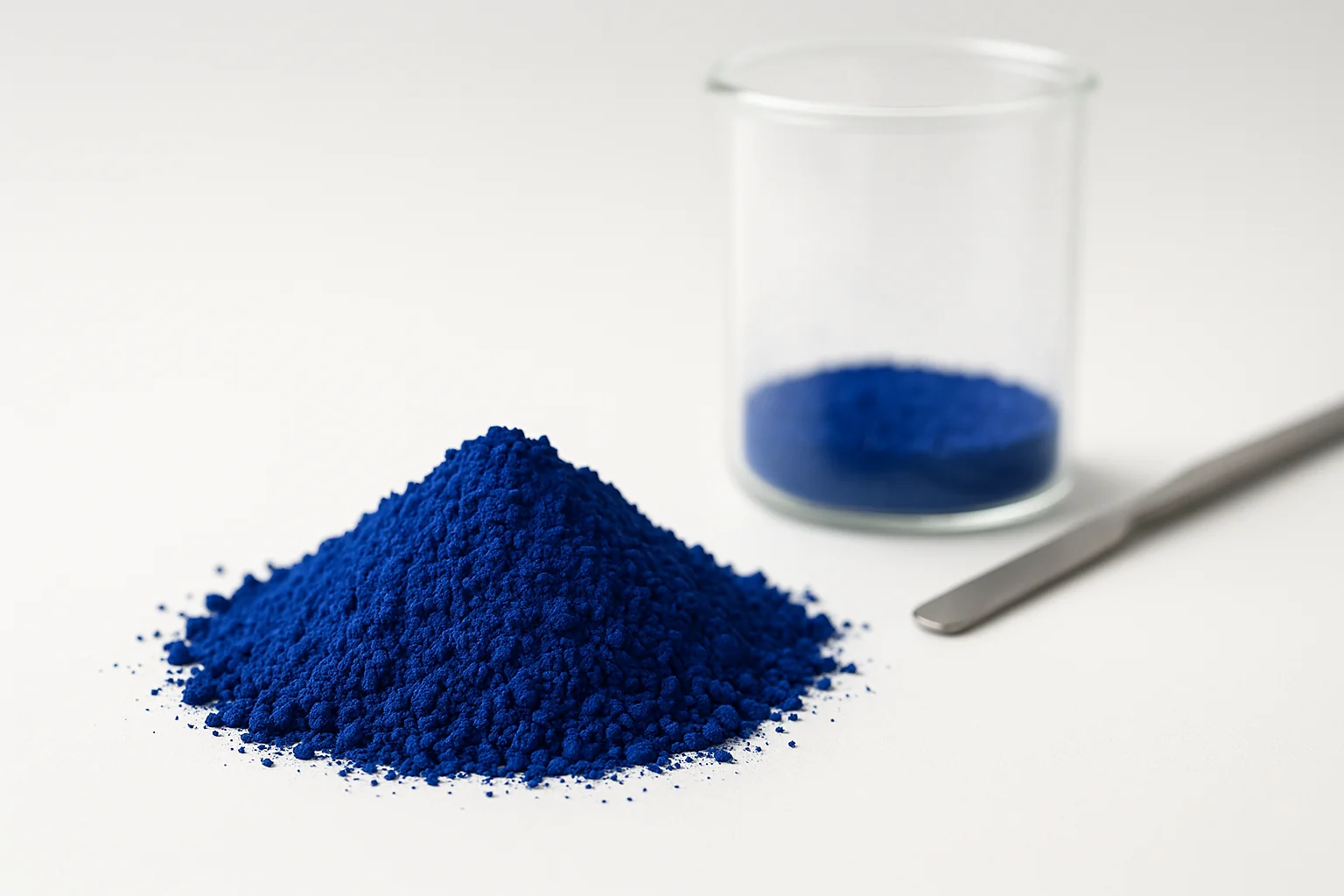
Pigment Blue 15:0 (C.I. 74160; typical CAS 147-14-8) is the non‑stabilized alpha polymorph of copper phthalocyanine (CuPc). It produces a vivid red‑shade blue with high tinting strength and very good lightfastness, but its α‑form is more susceptible to phase conversion under heat, energetic dispersion, or aggressive solvent environments than stabilized PB15 variants. For formulators, that means PB15:0 can deliver clean, transparent reds of blue—provided processing windows and solvent choices are respected.
Key identifiers and what they imply
Colour Index naming authority: The Colour Index International catalogs the PB15 family and establishes the canonical naming used across industry. See the authority homepage for nomenclature context in pigments and dyes via the Colour Index International site.
Chemical identity: Copper phthalocyanine macrocycle coordinated to Cu(II); PB15:0 denotes the α (alpha), non‑stabilized modification within the PB15 family.
C.I. number and CAS: The PB15 family is referenced under C.I. 74160. Copper phthalocyanine commonly maps to CAS 147‑14‑8; see the compound record on PubChem for Copper phthalocyanine for corroborating identifiers.
Why the alpha form matters: α‑CuPc can convert to β under thermal/solvent/energy stress. This often shifts hue slightly greener, can reduce tinting strength, and alters fastness/migration behaviors. Spectral libraries such as IRUG differentiate α vs β signatures; explore the PB15 index via the IRUG spectral database index for context on polymorph identification.
Properties and practical ranges for pigment blue 15:0
Exact values depend on grade, surface treatment, and dispersion state. Always confirm on the specific TDS.
Hue and strength: Red‑shade blue; typically high chroma and strong tinting.
Lightfastness: Very good to excellent in many media (PB15 family often reports Blue Wool ~7–8; substrate and loading dependent).
Oil absorption: ≤45 cc/100 g (example data set reported in a PB15.0 TDS).
Bulk density: ~1.5 g/cm³ (reported range; grade dependent).
pH (aqueous paste context): ~6–7.
Sieve residue (45 μm): <1%.
Moisture: ≤1%.
Solvent fastness (scale 1–5, 5 = best): Ethyl alcohol 5; Ethyl acetate 5; Xylene 5; MEK 4–5; Mineral spirit 5.
Heat resistance: Suitable around 180–200 °C for short exposures when properly formulated; beyond this band, α→β conversion risk rises, especially in aromatic‑rich matrices.
Data source for representative ranges: Vipul Organics — Pigment Blue 15.0 TDS (PDF). For polymorph context and α/β distinctions, refer to the IRUG PB15 entries. Values vary by grade and testing method.
Processing and dispersion guidance (managing α→β risk)
Achieving stable color with PB15:0 is about controlling temperature, solvent quality, and energy input.
Control milling temperature: Use coolant circulation on high‑shear equipment to prevent adiabatic heat spikes that can encourage phase drift.
Stage the energy: Ramp dispersion energy rather than hitting maximum load immediately; verify grind with a Hegman gauge while keeping temperature in check.
Solvent choice: Favor aliphatic/oxygenated systems for tougher dispersions; use care with aromatic/ketone‑rich blends during high energy milling.
Waterborne specifics: CuPc pigments have low intrinsic polarity—pair nonionic/anionic dispersants suited to your resin, and ensure full wetting before applying high shear.
Plastics/masterbatching: Keep extrusion temperatures and residence times as low as process allows (often ≤~200 °C short dwell for α‑grades); test post‑processing color drift via controlled thermal soaks.
QC checks: If available, spot‑check α/β state using Raman/FTIR alongside practical application tests.
Applications and limits
PB15:0 excels when a clean red‑shade blue and transparency are desired under moderate processing conditions. It is less appropriate in aggressive solvent environments or high‑temperature plastics.
Printing inks
Common in water‑based and selected solvent‑based packaging/publication inks that do not rely on CMYK cyan standards. Monitor aromatic content in vehicles and keep milling temperatures controlled to preserve the α state. As a practical example in inks and coatings workflows, the grade HP BLUE 4467 can be used where a red‑shade blue PB15:0 is desired in balanced, moderate‑bake systems.
Coatings
Used in certain architectural and industrial coatings where vivid red‑shade blue and good lightfastness are needed, provided bake schedules and solvent packages are not overly aggressive. Stabilized PB15 variants are typically preferred for high‑bake or high‑aromatic formulations.
Plastics
Best suited to PVC and lower‑temperature polyolefins (e.g., LDPE films) processed below roughly 180–200 °C with short dwell. Color drift or shade shift can appear in PS, ABS, or PET due to higher processing temperatures and aromatic character that favor α→β conversion. For plastics formulations, a PB15:0 grade such as HP BLUE 43143 is commonly selected for PVC or low‑temperature polyolefin applications where a redder shade is specified.
PB15 family at a glance (high‑level)
Attribute | PB15:0 (α, non‑stabilized) | PB15:1/15:2 (α‑modified) | PB15:3/15:4 (β‑modified, stabilized) |
|---|---|---|---|
Shade | Red‑shade blue | Red‑ to mid‑blue (grade dependent) | Greener blue vs α |
Crystallographic stability | Lower; sensitive to heat/solvents/energy | Improved vs PB15:0 | Highest stability |
Heat window (short dwell) | ~180–200 °C (grade dependent) | ~190 °C typical (system dependent) | Generally more robust in high‑bake |
Solvent robustness | Good in many systems; sensitive during high‑energy milling in aromatics/ketones | Generally good | Good to excellent |
Typical fit | Watercolors, educational materials; selected inks/coatings; PVC/LDPE | Broad α‑blue uses where red shade is desired | Aggressive inks, high‑bake coatings, higher‑temp plastics |
Context and corroboration: IRUG spectral entries for PB15 polymorphs and representative TDS such as Vipul PB15.0.
FAQ and troubleshooting for formulators
Is pigment blue 15:0 the same as CMYK cyan? No. PB15:0 is a red‑shade blue and is not the standard cyan used in four‑color process inks.
How do I tell if α→β conversion occurred? Look for a subtle shift toward a greener blue and a drop in tinting strength. Confirm with a controlled thermal soak and, if available, Raman/FTIR.
What’s a practical safe processing temperature? Many PB15:0 grades tolerate around 180–200 °C for short exposures; always test in your system and consult the specific TDS.
Any special tips for waterborne dispersions? Pre‑wet thoroughly with an appropriate nonionic/anionic dispersant blend, then apply controlled high shear with active cooling to avoid temperature spikes.
Can I use PB15:0 in ABS or PET? It is generally not recommended due to higher processing temperatures and the propensity for α→β conversion; stabilized PB15 variants are usually preferred.
Why does solvent choice matter during milling? Aromatic/ketone‑rich blends combined with high energy can swell pigment crystallites and accelerate phase drift; staged energy and cooling help maintain the α form.
References and further reading
Colour Index authority for pigment nomenclature: Colour Index International.
Spectral identification and polymorph context: IRUG spectral database index for PB15 family.
Representative quantitative ranges (oil absorption, density, solvent fastness, heat window): Vipul Organics — Pigment Blue 15.0 TDS (PDF).
General compound identifiers and CAS mapping: PubChem — Copper phthalocyanine.
If you’re evaluating PB15 grades for inks, coatings, or plastics, consider short lab trials under your real processing temperatures and solvent packages, and compare α‑ and β‑stabilized options side‑by‑side to confirm the fit for your application.
 English (UK)
  Español
  Português
  Français
  Русский
  Türkçe
  العربية
  Bahasa Indonesia
  한국어
한국어  Čeština
  Nederlands
  עִבְרִית
  Ελληνικά
  日本語
日本語  Italiano
  Português do Brasil
  Deutsch
  Română
  Español de Argentina
  Irish
Irish  Español de Colombia
  Dansk
Dansk  Қазақ тілі
  Монгол
  Español de México
  O‘zbekcha
  Shqip
Shqip  English (South Africa)
  Deutsch (Österreich)
  Español de Chile